HAS DEAR OLD DETTERS PASSED AWAY?
Could be. Detterling has not posted for weeks on here. He is a great age now. 82 by George!

DETTERLING TRAINSPOTTING 1959
Trans patients should be cared for on single-sex hospital wards or bays that align with their biological sex rather than their gender identity, according to new NHS England (NHSE) guidance.
It says when this is not "clinically appropriate" then alternative arrangements should be made and the dignity and safety of all patients should be maintained.
The guidance also says staff facilities should be used by people based on their biological sex, while trusts should ensure enough alternatives to single-sex facilities, such as single-occupancy toilets, are offered.
Previous NHSE guidance suggested patients and staff could be accommodated on wards or use facilities based on their gender identity.
That meant that a trans woman – a biological male who identifies as a woman – could have chosen to be on a women's ward, or a trans man – a biological female who identifies as a man – could have opted for a men's ward.
That guidance was withdrawn following the Supreme Court ruling in April 2025 that under equality law the term "sex" means biological sex and "woman" refers to a biological woman.
The judgment said for a space or service to be single sex it should only allow those of the same biological sex to use it.
Also under the new guidance issued on Thursday, NHSE emphasised that in order to avoid discriminating against trans people they should be offered gender neutral spaces.
But the guidance also says decisions may have to be made on a case-by-case basis and must ensure clinical needs are met.
It also makes clear that there are circumstances where clinical need is the overriding priority, including on emergency units and urgent care settings.
In addition to the patient document of the guidance, NHSE has published advice for trusts on how to organise changing rooms, toilets and other single-sex facilities for staff.
Again, it says they should be used by people based on their biological sex, not their gender identity.
The document encourages NHS trusts in England to carry out an audit to ensure they are offering enough alternatives to single-sex facilities, for instance, gender neutral or single occupancy toilets.
Pressures on hospitals mean many have already struggled to keep wards single sex.
NHSE data shows that the number of breaches of the previous mixed-sex accommodation guidance has been growing every year since 2021- where members of the opposite sex were placed on a single-sex ward.
The most recent figure for August 2026 shows there were 5,520 breaches, compared to 3,853 in June 2025.
Sex-based rights charity Sex Matters has welcomed the guidance as a "momentus shift back to reality", but is concerned about how it will be applied.
"NHS patient data is a mess, with potentially thousands of trans-identifying people recorded as the opposite sex," CEO Maya Forstater said.
Trans rights organisations TransActual and Trans+ Solidarity Alliance have said they are concerned NHS staff will be unclear on how to safely look after trans patients.
"This guidance will not survive contact with reality in resource-strapped hospitals and will create unworkable operational challenges," they said.
The NHS has been at the centre of a number of high-profile arguments over the interpretation of equality law and workplace regulations.
In January 2026, Darlington Memorial Hospital was found to have violated the dignity of a group of nurses who complained about a transgender colleague - a biological male who identified as a woman - being allowed to use the female changing rooms. The nurses were told they should change somewhere else if they objected.
The tribunal concluded that the trust had indirectly discriminated against them.
The nurses are currently seeking £400,000 from the NHS to cover their legal costs.
One of the nurses who brought the action, Bethany Hutchison, who is now president of the Darlington Nurses Union, says they welcome the "clear and necessary guidance" from NHSE, but the test will be whether trusts follow it.
"The Darlington nurses should never have had to take their own employer to court to secure privacy, dignity and lawful single-sex facilities," she said.
"Enforcement cannot continue to depend on the courage and personal sacrifice of individual nurses."
In Scotland, another employment tribunal found, in December 2025, that a nurse, Sandie Peggie, had been harassed by NHS Fife over its interpretation of rules on single sex spaces.
Peggie had complained about a doctor, who was a trans woman, using the female changing rooms.
She was suspended after raising concerns. The tribunal dismissed her other claims of discrimination and victimisation.
An appeal is under way and expected to reach the courts next year.
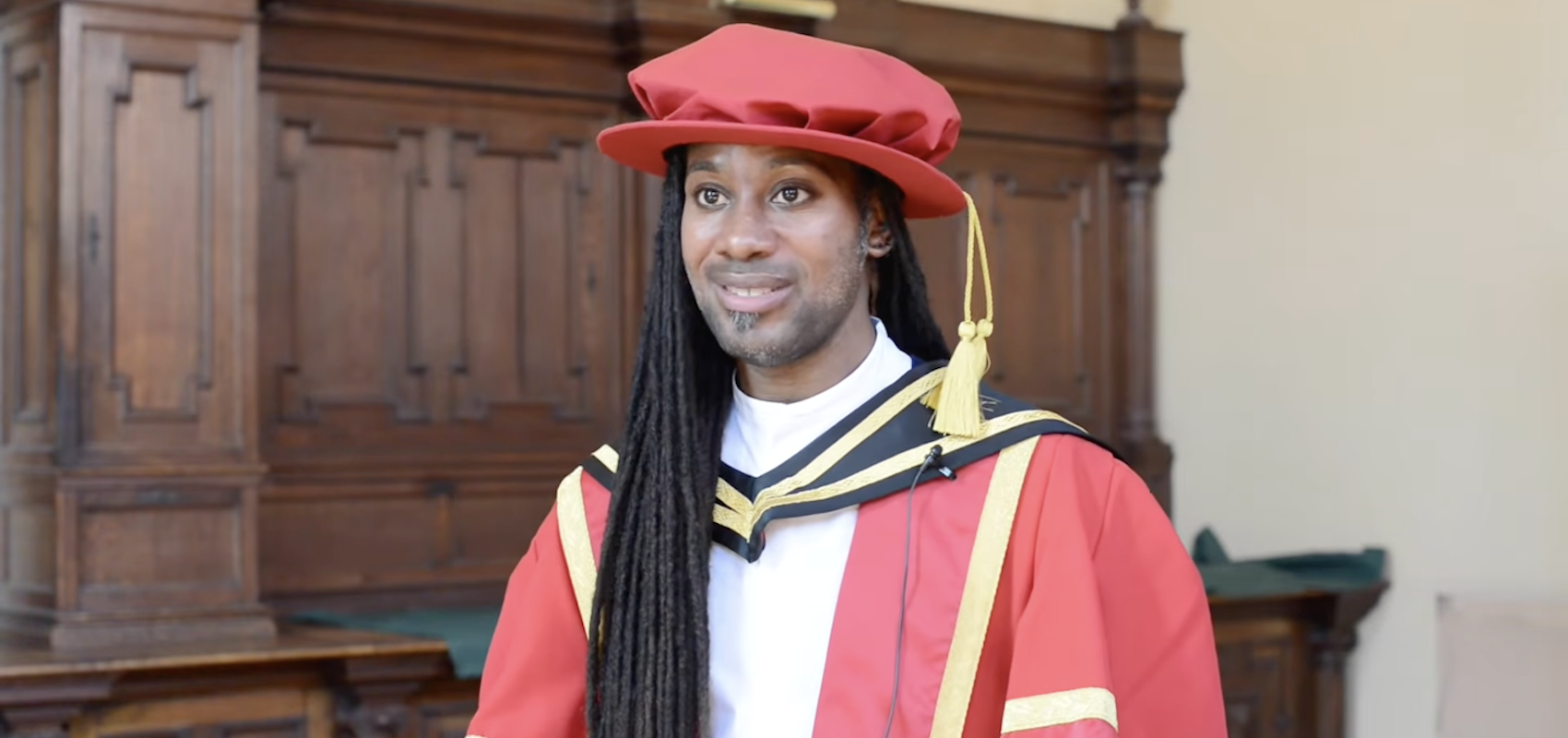
The big news story of early August was Jason Arday. Appointed to a professorship at Cambridge University in 2023, the black scholar had been championed by university leaders as a sign of their great commitment to righting racial injustice and achieving “real” diversity. Unfortunately for Cambridge, Arday was exposed as a plagiarist, fabulist, and academic fraud. The public revelations led Arday to resign on August 5. A week later, he committed suicide.
I regard Arday as a victim of the mostly white, progressive fixation on victims. He clearly had a genuine intelligence. Knowing a chance when he saw it, Arday fabricated patently unbelievable stories of his childhood, claiming to have suffered from severe disabilities, knowing that the more disadvantaged and “marginal” his image, the more highly he would be prized. He entered fields (sociology and education) in which his stories would warm the hearts of colleagues, and the fabulation worked. Neurodivergent and black! The very thought of elevating such a person to the highest honors provoked spontaneous orgasms in progressive circles.
Questions were raised about plagiarism soon after Arday’s appointment at Cambridge. University officials refused to investigate. Last year, as a journalist was preparing an exposé, legal action was taken to kill the story. In a further step, Arday reported the journalist to the police for engaging in racial harassment. When a scholar at another university raised questions about his publications, Arday filed a racism complaint with his employer. Extensive plagiarism in his doctoral thesis was documented by academic experts. Both Cambridge and the university that awarded Arday his doctorate dismissed the charges. His allies at Cambridge played the race card in an open letter: “The integrity of higher education is at risk if we do not take a stand and speak out against the systematic attempts to erase Black scholarship.” At each juncture, the British establishment protected him.
Arday had to be protected. For those running Cambridge University and every other institution of consequence in Great Britain, Arday was a cherished sacred object, not a person. To this day, the university’s public pronouncements speak about him with great delicacy to avoid any hint of sacrilege. In this environment, I imagine that Arday recognized he could get away with pretty much anything. However fraudulent his academic career, Arday possessed an entrepreneurial genius, if also a disturbed psyche. He took advantage of the atmosphere of unaccountability and plenary permission with remarkable élan.
Yes, Arday exploited his black privilege. But he was also exploited. Heidi Mirza, one of his graduate school advisers, observed before his suicide, “He’s a pawn whose ambition made him vulnerable.” David Harris, a fellow academic whose questions about the integrity of Arday’s scholarship were ignored, commented at the time: “Prof Arday badly needs critical friends, in my view, not sycophants.” I’m not sure “sycophants” is the right word; “enablers” seems more accurate.
The whole affair reveals a great deal about today’s university culture. I can testify from experience as a professor for twenty years that university faculty engage in constant gossip and endless, detailed dissection of university politics and events, even the most trivial. It’s beyond belief that Arday’s fraudulence and incompetence were not widely known and whispered about in Cambridge common rooms. Yet everyone went along and maintained appearances. The collective agreement to sustain a lie likely rested in pious convictions that Arday’s presence on the faculty served the goals of social justice to such a degree that the price of compromised academic standards was worth paying. Those with misgivings were cowed by the power of identity politics. Why speak up? It will only bring grief and reprisals. (The academic who detailed Arday’s plagiarism was suspended by his university.) Whatever the cause, the silent complicity of an entire elite university bespeaks a deep corruption. These are not good times in higher education.
During the same month that Arday’s story made headlines, The Atlantic published “Confessions of a Token Black Professor: Why I Lost Faith in Academia” by Tyler Austin Harper. Hired in 2020, Harper recounts his experiences at Bates College, an elite liberal arts college in Maine.
In the aftermath of the George Floyd–inspired Summer of Love, college leaders at Bates pressed for dramatic changes, including a plan for required “Race, Power, Privilege, and Colonialism” (RPPC) classes in every major. From the outset, Harper had misgivings, but with a modesty befitting a newly hired faculty member, he withheld judgment. In due time, however, he came to an unhappy conclusion about the college. Bates, he writes, is “a place where current and future elites paid—or were paid—for the privilege of cosplaying as radicals, victims, or both.”
Before he arrived at Bates, Harper had accepted the stated purposes of affirmative action, which involve giving priority to candidates from underprivileged backgrounds or marginal communities who have hidden or delayed promise, while continuing to maintain academic standards. But his experiences of what really happens during the process of faculty hiring taught him otherwise.
“After a few years at Bates,” he writes, “I began to see the version of affirmative action that I had defended in my head as a fantasy.” Serving on faculty search committees, he learned that being black was the overriding “qualification,” not academic achievement or promise. “A sort of woke Jim Crow” operated, one “in which radically separate standards were applied to white and nonwhite candidates.”
Harper knew, of course, that he was not the only faculty member who was aware of the “radically separate standards.” It’s an open secret as widely known as it is universally denied. Which means that Harper himself, an accomplished scholar and among the most promising young faculty at Bates, was implicated. He notes that senior leaders at Bates slotted him into committee assignments that concern “Black” issues. He began to see that he was not a fellow professor in a community of scholars; he was a pawn, a token, a pricelessly valuable commodity—one of the “irreplaceable negroes,” as a black friend of his wryly put it.
In 2025, Harper resigned from his faculty position at Bates. In the end, it was not the woke Jim Crow or his role as a token black professor that drove him from the ivory tower. It was instead a general sense that higher education has become intellectually and morally bankrupt. He comments on his reaction to a poster announcing the college’s annual sex week:
Once, I might have seen in that poster a symptom of everything wrong with the college—money wasted on weird bullshit, organized by bureaucrats whose jobs nobody could explain. Now I found it all oddly refreshing. What was Bates if not a place devoted to risk-free ideological masturbation? For a week, at least, we could be honest about it.
After resigning, Harper reports on the fate of the RPPC courses. Securing this purportedly transformative initiative had been the great ambition of the college’s leadership, and it was passionately supported by many faculty members. Yet in November 2025, as the Trump administration was pressuring higher education to abandon DEI projects, college leaders counseled the faculty to vote to suspend its implementation.
Harper notes that he should have been happy to hear the news: “I had argued all along that the RPPC was pointless, unworkable, mad.” Yet he found himself to be disappointed: “Here was one last sign that it had all meant nothing.” He recalls an early Bates student (the college was founded by abolitionists in 1855) who left the college to fight for the Union cause. At the Battle of Gettysburg, he led a bayonet charge down Little Round Top and “into the maw of an advancing Confederate force.” Turning to consider his former colleagues, Harper observes, “Now this same college could not find the spine required to simply stand by a curricular change that its faculty and administrators had breathlessly, earnestly, performatively insisted was an imperative because it was nothing less than a matter of justice.”
Those who hope to reform higher education have an important lesson to learn: What Harper endured and now regards with disdain was not the consequence of a few radical faculty members or covens of activist students. By Harper’s account, “the source of the most intense racial monomania on campus, I came to realize, was senior leadership.” The same senior leaders folded their tents when the wind changed direction. I’m willing to bet a similar spinelessness rules at Cambridge and elsewhere across the defiled landscape of higher education. Too many of our institutions are run by men without chests.

O God, who, through the mystery of the Word made flesh, didst in thy mercy sanctify the house of the Blessed Virgin Mary: do thou grant that we may keep aloof from the tabernacle of sinners, and become worthy indwellers of thy house; through Jesus Christ thy Son our Lord, who liveth and reigneth with thee, in the unity of the Holy Spirit, ever one God, world without end. Amen.
PRAY FOR ME FOLKS...
I am in the Slough of Despond. Marianne left on 7th September. No, we are not getting divorced or separated. She just wants to be away for some time. I have agreed not to attempt to contact her.
I'm just not coping. I cannot live without the most wonderful woman in the world.
My friends have been wonderful - especially Tony of the Big Saloon who has been a rock. Mary Winterbourne comes in almost every day, tidies up and gets rid of the empty lager and Chianti bottles.
I just know Marianne will be back soon.
Also I have this threat by Detterling hanging over my head. May The Lord rebuke him. May Swashbuckling Mulligan boot him up his fat ass.
Gene
PS ... All day all night Marianne
Down by the seaside sifting sand
We have known since the 1980s, when Stanley Rothman published the first of his research on media elites, that those who occupy the command posts in the media are overwhelmingly on the abortion-rights side. That is why they are already lionizing Gloria Steinem, who died at 92. But there is another side to her, one that the media will not discuss.
Is it possible to be “pro-choice” and not anti-Catholic? Of course. Is it possible to be a rabid “pro-choice” activist and not anti-Catholic? Possible, but not likely. That’s because these activists see the Catholic Church as the enemy—they are right about that—and most of them allow their disagreements to spill into bigotry. Steinem was one of them.
Pope John Paul II said Mass at St. Patrick’s Cathedral in 1995. I was inside. Outside there were more than 1,000 anti-Catholic protesters. They carried signs bashing the pope; they also had signs bashing the Catholic League. Many of the protesters hurled obscenities. This bigoted exercise was led by Steinem and Olympia Dukakis.
Steinem held a press conference, telling the media, “We will live to see the day that St. Patrick’s Cathedral is a child-care center and the pope is no longer a disgrace to the skirt that he has on.”
Steinem put the lie to the notion that “no one is really pro-abortion.” She liked abortion. In fact, she loved it. That is why she happily endorsed a book by atheist and anti-Catholic activist Anne Nicol Gaylor titled, Abortion Is A Blessing. Did she consider it a “blessing” when she aborted her baby at age 22? Not sure, but it would not surprise to learn that she did. After all, she called “National Abortion Providers Appreciation Day” an occasion that recognizes “acts of kindness.”
She was more than pro-abortion—she hated marriage and the family. She made it her ambition to “abolish and reform the institution of marriage.” Anyone who thinks it is a good idea to raise kids absent the institution of marriage is either ignorant of the psychological and social consequences it engenders, or is morally debased beyond recognition.
The other side of Gloria Steinem is not pretty. Indeed, it is quite ugly.
As you can watch in the short but powerful video below, at age five, Carlo Acutis experienced a profound vision of his maternal grandfather, who had died unexpectedly a few months prior.
Carlo described seeing his grandfather with a sorrowful expression; he explicitly told Carlo that he was in purgatory and urgently needed prayers to be freed.
The experience was far too vivid and detailed to be a simple dream or a child’s way of processing grief. Because Carlo had never heard talk of purgatory at home, the precise details and the sudden request left his mother, Antonia—who was a non-practicing Catholic with a fragile faith—deeply shaken.
Convinced that her five-year-old child could not have invented such concepts on his own, she viewed the vision as tangible proof of an active afterlife. Struck by the clarity of the encounter, she began praying for her father’s soul, investigating Catholic theology, and ultimately returning to her faith with Carlo acting as her young catechist.
This early vision shaped Carlo’s life and inspired him to dedicate himself to supporting the souls in purgatory. He understood the Church as a unified body across Heaven, earth, and purgatory, drawing on the biblical tradition in Maccabees of offering sacrifices for the deceased.
Carlo created a “spiritual piggy bank,” routinely offering up daily prayers, acts of self-denial, and small sacrifices for specific souls. He viewed this as one of the best investments possible, explaining to friends that helping souls reach heaven gained powerful heavenly intercessors who would not forget those who aided them. Central to his mission was his devotion to the Eucharist; he regularly attended Mass and offered Holy Communion for the dead, regarding the Eucharist as the ultimate act of charity and purification.
When Carlo was diagnosed with aggressive acute promyelocytic leukemia at age 15, he maintained remarkable serenity and care for others, never complaining about his condition. In his hospital bed, he deliberately offered up his physical suffering for the Pope and the Church, while also asking God that this earthly suffering serve as his final purification so he would not have to go to purgatory and could go straight to heaven. He received the Anointing of the Sick and final Communion before passing away on October 12, 2006.
Carlo’s life bridges ancient doctrine with modern living, demonstrating how traditional practices—such as offering Mass, praying the Rosary, and making personal sacrifices—can be actively integrated into daily life. His story serves as a reminder of the power of praying for the dead and illustrates that the path to holiness is open to everyone.
The first concert will be on 29 October
St Paul's Cathedral has signed a four-year deal with the London nightclub Fabric to stage music events inside the building.
Under the partnership, Fabric will be the cathedral's exclusive partner for such events until 2030. The first concert is due to take place on 29 October, although the artist has not been announced.
Fabric co-founder Cameron Leslie called the deal "an extraordinary and unexpected coming together of two very different parts of London".
Sandra Lynes Timbrell, the cathedral's director of visitor engagement, said she hoped a "carefully curated programme of exceptional concerts" would draw people who had not visited before.
Artists RY X played at St Paul's Cathedral in 2024
"These events showcase world-class talent and create unforgettable experiences for audiences within one of London's most iconic spaces," she said.
She added that the cathedral wanted to encourage people "to discover and engage with this historic building in new and exciting ways".
Mr Leslie said Fabric had "always been about bringing people together through music", and that the club was looking to create "something genuinely special and befitting of this incredible space".
The organisers said the programme would feature artists "from different musical backgrounds and disciplines whose work responds to the Cathedral's distinctive atmosphere, acoustics and architectural heritage".
St Paul's has previously held concerts by the artists RY X in 2024 and Patti Smith in 2025.
Music events in cathedrals have proved contentious elsewhere.
Silent discos held at Canterbury Cathedral in 2024 were dubbed a "rave in the nave" by critics, and a petition calling for them to be stopped attracted more than 1,600 signatures.
Its organiser, Cajetan Skowronski, said at the time that such events would "not bring young people closer to Christ" and would instead suggest "that entertainment deserves our attention more than God".
Fabric, in Farringdon, had its licence revoked in 2016 after Islington Council found what it described as a culture of drug use at the venue.
Two 18-year-olds had died earlier that year in separate incidents after taking drugs at the club.
The venue reopened in January 2017 after agreeing new licensing conditions with the council and the Metropolitan Police, including a higher minimum entry age and tighter security.