The Politics of Judas
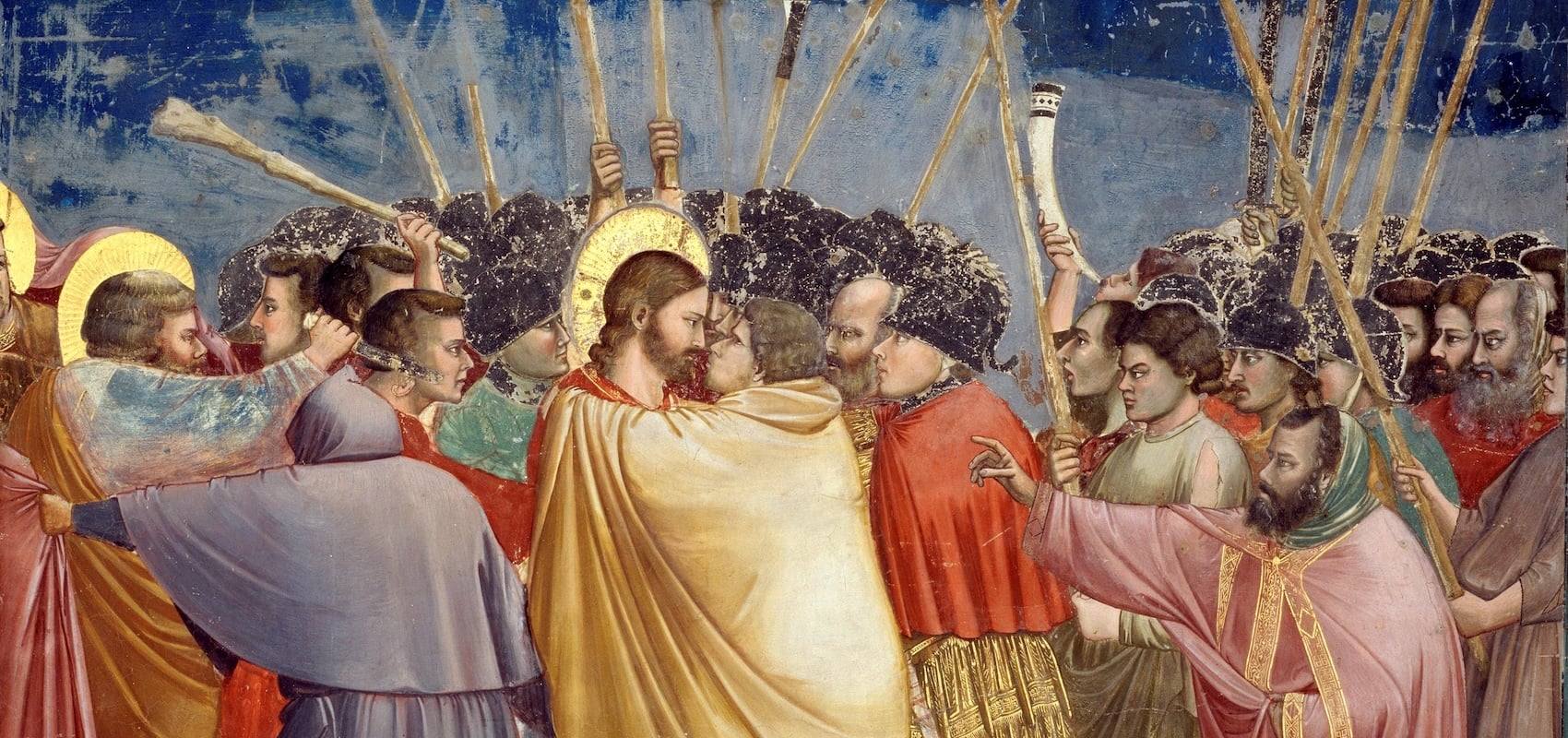
In this Easter season, we naturally reflect on the passion of Christ, his resurrection, and all that it entails for the human race. But there is a part of the story, seldom analyzed in depth, that deserves close attention as well, especially in our current cultural moment: What motivated Judas Iscariot to betray Jesus Christ?
A stock answer is that Judas did it for the money. After all, as the apostle John notes, Judas “was a thief; as keeper of the money bag, he used to help himself to what was put into it” (12:6). And Matthew tells us that Judas sought to be paid by the chief priests for his treachery; accordingly, “they counted out for him thirty pieces of silver” (26:15). Thirty pieces of silver was no pittance. It amounted to a few months’ wages—enough to buy a decent plot of land.
But the profit motivation theory can’t account for the rest of the story. We are told that, “When Judas . . . saw that Jesus was condemned, he was seized with remorse and returned the thirty pieces of silver to the chief priests and the elders. ‘I have sinned,’ he said, ‘for I have betrayed innocent blood’” (Matt. 27:3–4). It is one thing to be remorseful for a treacherous act, but it’s quite another to throw away all of one’s profits. What’s more, Judas then went on to commit suicide.
These facts also undermine the theory that Judas was motivated by anger. The supposition here is that Judas expected a militant Messiah and was initially convinced that Jesus fit the bill. But when the Lord refused political action and even began predicting his death, Judas’s hopes were dashed, his loyalty turned to anger, and in his disillusioned rage he handed Jesus over to the authorities. But, again, this theory cannot explain Judas’s deep remorse over Jesus’s condemnation.
We tend to think of the Judas psychology as distinctly foreign, even incomprehensible—certainly not relevant to us. But I believe that this attitude is quite mistaken. The way of Judas is familiar to many of us, perhaps most of us. Consider the desperate plight of the Jews in the first century. They were subject to brutal Roman military governance, severe economic exploitation, community displacements, and persistent interference in their religious affairs. Like most other Jews of the time, Judas had grown weary of Roman oppression and was eager to see them overthrown. And having seen Jesus perform dozens of miracles, Judas knew as well as anyone that he possessed special powers, whether by sorcery or the Spirit of God. The Romans would be no match for this man, whom even the winds and the waves obeyed.
But Jesus was too patient or else not sufficiently motivated to use those powers to overthrow the entire Roman Empire and set up David’s throne, as the Scriptures had prophesied. What could work as a catalyst? Maybe all that was necessary was the right kind of pressure to force Jesus’s miraculous hand. Perhaps a simple, even gentle betrayal—sealed with a kiss—was all that was really needed to trigger the revolution. Backed into a corner, with his life at stake, surely then Jesus would deploy his higher powers to make it happen.
But Jesus didn’t respond as Judas expected. From the sham trial all the way through the crucifixion, those miraculous powers lay dormant, and Jesus meekly succumbed to every bit of the torturous abuse. Even a lamb would have put up more of a fight.
So Judas despaired, to the point of suicide, over betraying “innocent blood.” His plan had failed. Not only would there be no revolution; a profoundly good man had been condemned to death. It was a double failure.
If Judas did have such political motives, then his actions are more comprehensible to us. But the explanatory reach of this theory extends well beyond the Gospel narrative. It explains far more than the mind of one Judas Iscariot. It also explains us. The Judas Way is actually very common throughout history and even serves as a critical diagnostic for our current cultural moment.
All Americans can agree on this much: We live in a highly disordered society with many corrupt, dangerous leaders at the helm. But we know it need not be this way. We can envision a much more just civic life, including better leaders, more just laws, and more reliable legal processes. It is within our grasp, if only the right policies were implemented and, toward that end, the right people were elected to bring that about. This is a natural and reasonable desire. So our political engagement is right, good, and proper.
But serious political engagement easily turns to idolatry. Our love for Christ can be overwhelmed by our desire for political justice. That’s when our pursuit of righteousness becomes obscured by passion for policy. The quest for personal revival is displaced by a desire for national revival. And Christ, the king of our hearts, is pursued as a means to achieve earthly kingdom ends.
This is one reason why the Judas Way is such a powerful and ubiquitous temptation—it is so close to the truth. After all, policy does matter. Earthly justice is important, and Christ will be king of the world one day. But the Judas Way is also easier than the Jesus Way. The pursuit of a more just civic order requires diligent study and hard work. But spiritual renewal requires personal repentance at the deepest level. Political transformation is hard won, but renovation of the heart takes a miracle.
Even we who have known Christ for years can succumb to the temptation to pursue him as a tool for political justice, if not outright revolution. Putting politics before individual spiritual renewal is a timeless temptation. But the Jesus Way is a revolution of the heart. Judas was blind to this, and we can be blind to it too.

No comments:
Post a Comment