Sunday, 8 June 2014

Pope Francis is right. We do love our pets more than our children


Pope Francis is right. We do love our pets more than our children


There are baby elephants fed on powdered milk near Nairobi while down the road human babies never see powdered milk from one year’s end to the next
By on Friday, 6 June 2014

A three years female puppy, is groomed at a pet hotel in Seoul, South Korea


The recent words of Pope Francis in a sermon to married couples, about some people preferring to lavish their affections on cats and dogs rather than children, reported in this newspaper,has generated a huge amount of comment. Even The Times made this the subject of its third editorial last Wednesday, wondering if this seeming swipe aimed at childless cat-lovers was some sort of veiled criticism of Pope Benedict, who is well known to love cats, and has no children.
This controversy, if that is what it is, is nothing new. Some years ago, La Civilta Cattolica, the ultra-serious and rather dull Jesuit magazine, whose contents are approved by the Vatican before publication, thus giving it semi-official status, ran an article about how one should not love one’s pets, and that love is only to be given to human beings, if memory serves. It condemned the idea of animal rights, and the way people spend more on animals than they do on human beings. Needless to say, this was misinterpreted by some (again, if memory serves) as an attack on animal lovers in general.
In fact the role and status of pets even makes it into the Catechism of the Catholic Church. Paragraph 2418 says: “It is contrary to human dignity to cause animals to suffer or die needlessly. It is likewise unworthy to spend money on them that should as a priority go to the relief of human misery. One can love animals; one should not direct to them the affection due only to persons.”
The Pope may well have been thinking of this section of the catechism. But it is also worth pointing out that the Argentine-born Pope is in fact Italian in culture, and Italy is not like England. In Italy many people are from the countryside, from farms, or related to farmers, and as such they do not have the romantic idea of animals as pets which the English have, thanks to the fact that very few of us ever see a farm. For most Italians, dogs and cats are working animals rather than pets, or, to use the more politically correct phrase for pets, “non-human animal companions”. To seek companionship in animals, as far as most Italians are concerned, is simply eccentric. I lived in Italy for eight years, and often heard remarks to this effect. Moreover, I lived in Africa for four years, and often heard the people there wondering at the way the wazungu (Europeans) loved their dogs, and gave them such good food too. Here indeed is the rub. Your average dog in England is truly pampered compared to many people in Africa. Indeed, even in Africa itself there are baby elephants fed on powdered milk in a sanctuary near Nairobi, looked after by devoted wazungu, while down the road human babies never see powdered milk from one year’s end to the next.
It is not fanciful to say that we love animals more than we love people sometimes. And the amount of cash we give to animal charities does raise moral issues. Our love of pets (and I speak as a former dog owner) is a sign of our membership of a post-agricultural society. Our love of pets could be, Pope Francis is pointing out, a sign that we are not simply post-agricultural but post-familial too. One can’t survive without agriculture, as we all have to eat. And, it might be added, we certainly cannot survive without the family.

Thursday, 5 June 2014

HEY! LOOK AT THOSE CRUCIFIXES


HEY!

LOOK AT THOSE CRUCIFIXES

Located in the city of Siauliai in Lithuania is the Hill of Crosses, Kryziu Kalnas. As noted, "Standing upon a small hill are many hundreds of thousands of crosses that represent Christian devotion and a memorial to Lithuanian national identity. The Hill of Crosses is a solemn testimony to the suffering, endurance, and love of Lithuanians for their Catholic Faith." No one is quite sure about the origin of the custom of placing crosses on the Hill of Crosses but it's believed this tradition began after the 1831 uprising of the Lithuanian and Polish armies against the Russians. Following the battle, Lithuania lived under the oppressive violence of the Russians, only gaining its total independence in 1991.


The+Hill+of+Crosses++Lithuanian+-+Ritebook+-+001.jpg (800×532)

Tuesday, 3 June 2014

Ageing

AGEING


Have just read that Marianne Faithfull has fallen and broken her hip. Made me think about ageing. Sometime it gives you a real jolt when you see a photo of someone you haven't seen for a while and you exclaim: 'Oh my God! Can that really be him/her? I had this experience recently when I saw a photo of the journalist/novelist Tony Parsons.


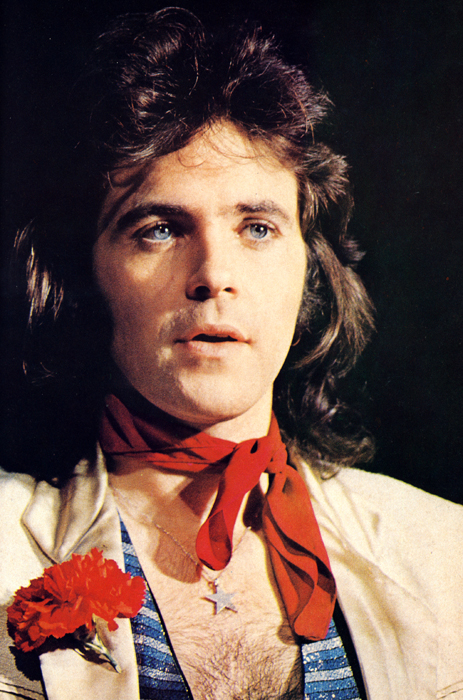
Herewith some young and old faces:


TONY PARSONS


ANITA PALLENBERG


DAVID ESSEX


JONI MITCHELL


Monday, 2 June 2014

Now we know why Dawkins refused to sign that letter from atheists condemning Cameron’s ‘we are a Christian country’: could he be on the way to belief?


Now we know why Dawkins refused to sign that letter from atheists condemning Cameron’s ‘we are a Christian country’: could he be on the way to belief?


Belief in the theory of evolution is no reason for atheism as Dawkins supposes: Darwin himself insisted that he had never been an atheist


Richard Dawkins: 'I would describe myself as a secular Christian' (AP)


On Easter Monday, the Telegraph published a Letter to the Editor from around 50 leading atheists, predictably including such names as Philip Pullman, Peter Tatchell, Polly Toynbee, Anthony Grayling, Evan Harris, and on and on: from my own point of view, a list of many of my least favourite bien pensant Lefties.
It began as follows: “Sir – We respect the Prime Minister’s right to his religious beliefs and the fact that they necessarily affect his own life as a politician. However, we object to his characterisation of Britain as a ‘Christian country’ and the negative consequences for politics and society that this engenders…. Britain is not a ‘Christian country’. Repeated surveys, polls and studies show that most of us as individuals are not Christian in our beliefs or our religious identities.”
One name, however, among those listed beneath this absurd farrago was conspicuous by its absence: that of the most famous atheist of them all: Richard Dawkins. How come?
Well, a few days ago, we got the answer, in the form of a declaration (reported by the Telegraph under the headline “Richard Dawkins: I am a secular Christian”) made at the launch of the first volume of his memoirs, An Appetite For Wonder. In response to an American Protestant minister in the audience who claimed that he no longer believed in miracles or that Jesus was resurrected, but still considered himself a Christian and preached the teachings of Christ, he made this reply: “I would describe myself as a secular Christian in the same sense as secular Jews have a feeling for nostalgia and ceremonies.” He then made the perceptive comment to the liberal Protestant who had questioned him: “But if you don’t have the supernatural, it’s not clear to me why you would call yourself a minister.” In other words, why you consider yourself a Christian at all.
Of his own atheism, Dawkins explained that had an “Anglican upbringing” but chose atheism in his early teens after learning about Darwin’s theory of evolution.
This reminded me forcibly of my own early history: for I, too, in my early teens decided I was an atheist, and on joining the British Humanist Association at the age of 17, sent off for a small pile of books from its catalogue, including Bertrand Russell’s Why I Am Not a Christian, and C M Beadnell’s A Picture Book of Evolution, which would, I was led to believe, explain to me why atheism was inevitable.
Well, here I am today, safely gathered in as a reliable Catholic bigot: partly because I realised that atheism didn’t work, and had brought disaster to every society in which it had become prevalent. What interests me is Professor Dawkins’s “nostalgia”, a word signifying a wistful affection for the past. That could mean (I hope it does) that he is searching, perhaps unconsciously, for lost Christian certainties.
Back to evolution. One reason I came to the conclusion that the theory of evolution, even if true, implied no reason to reject the existence of a God was that very few people within the Church who really counted had ever seen any dissonance between evolution and belief. In my own study of the 19th century (which as a PhD student became my period of particular interest), I discovered that although it was certainly the case that some 19th-century intellectuals lost their faith as a result of reading On the Origin of Species, by no means all of them did, nor was the theory of evolution rejected by most Christian theologians as I had supposed (and as most people still think today). It was rejected by literalist fundamentalists, maybe: but they were in a minority then as they still are (they have always been an essentially protestant phenomenon).
An interesting example was the conservative Anglo-Catholic theologian Henry Liddon, a Canon of St Paul’s, and an admirer of Dr Pusey, who was prepared seriously to consider Darwin’s theory as far as it went, but simply observed that it didn’t address the real question of our ultimate origins: he, like many ,continued to believe that man was created by God: but that evolution may well have been part of the creator’s modus operandi. From the pulpit of St Paul’s he addressed the question of Darwin’s conclusions about the beginnings of human life, by saying that “…We cannot forget what our faith teaches us about its origin, its present purpose, and its coming destiny… For our part, as we contemplate the human body, we cannot forget its author. Even if evolution should win for itself a permanent place in our conceptions of the past history of man, it would still leave untouched the great question of man’s origin…”
There was no automatic rejection by mainstream Christian thought of Darwinian evolution. Early contributions to the development of evolutionary theory were made by Catholic scientists such as Jean-Baptiste Lamarck and the Augustinian canon Gregor Mendel.
For nearly a century, the Holy See came to no publicly enunciated conclusion about Darwin’s theory. In the encyclical Humani Generis (1950), Pius XII declared that there is no intrinsic conflict between Christianity and the theory of evolution, provided that Christians believe that the individual soul is a direct creation by God and not the product of purely material forces.
I think that Professor Dawkins ought now seriously to consider the uncertainties of his own great hero, Charles Darwin: in particular he might ponder on the absurdity of concluding that there is no God, having merely read On the Orgin of Species, when that was very far from being Darwin’s own conclusion from the process of having written it.
Darwin himself said that when he wrote On the Origin of Species he was still convinced of the existence of God as a First Cause and that he was a theist. In 1879 he declared that he had never been an atheist in the sense of denying the existence of a God, and that generally “an Agnostic would be the more correct description of my state of mind”. He went as far as saying that “Science has nothing to do with Christ, except insofar as the habit of scientific research makes a man cautious in admitting evidence…. As for a future life, every man must judge for himself between conflicting … probabilities.”
How close Professor Dawkins is to discovering that the supernatural is a reality, I cannot say; but he may without realising it be very close. What he needs now is a small dose of his hero’s own uncertainty; he sounds to me as though already he may be quite close to his agnosticism. From there it’s just a very small leap: and he will be home. Catholics should all pray for that.

My top five all time favourite sculptures


My top five all time favourite sculptures


No titles, no names of sculptors... just enjoy


photo


Wednesday, 28 May 2014

The Vatican knives are out – again – for disgraced gay Cardinal Keith O'Brien. Should we feel sorry for him?

The Vatican knives are out – again – for disgraced gay Cardinal Keith O'Brien. Should we feel sorry for him?
 

Cardinal O'Brien: Rome isn't finished with him yet


Cardinal Keith O'Brien, former Archbishop of St Andrews and Edinburgh, already bears the title of Most Disgraced Cardinal of the Twenty-first Century. He was the only cardinal-elector banned from voting in the conclave that elected Pope Francis. Why? Because he'd been accused of making sexual advances to young clergy, and admitted inappropriate sexual behaviour even after he was made a cardinal. He resigned his see and planned a quiet retirement in the Scottish countryside, only for Rome to force him into exile abroad. At which point his successor, Archbishop Leo Cushley, suggested that the old man "had been punished enough".
Now we read this, by Joshua McElwee in the National Catholic Reporter:
The Vatican has appointed a bishop known for aggressively investigating cases of sexual abuse to take testimony of clergy alleging sexual misconduct in Scotland's archdiocese of St Andrews and Edinburgh, where Cardinal Keith O'Brien was archbishop until resigning under disgrace in February 2013.
The archdiocese's current leader, Archbishop Leo Cushley, announced the investigation in two letters sent to his clergy Tuesday.
The letters, which were obtained by NCR Thursday from a priest of the archdiocese, announce what may be the first instance of an investigation by the Vatican of sexual misconduct by one of the church's cardinals, who are normally considered nearly above reproach in the Vatican's hierarchical structure.
O'Brien, who had served as the archbishop of Edinburgh since 1985, resigned abruptly just days before Pope Benedict XVI abdicated in February 2013, following allegations by three priests and one former priest of the Scottish archdiocese that the cardinal had inappropriate sexual relations with them dating back some 30 years.
Tuesday's letters from Cushley state that Pope Francis has asked the Vatican's Congregation for Bishops to send Maltese Auxiliary Bishop Charles Scicluna to "listen to and report the testimony offered by past and present members of the clergy … concerning any incidents of sexual misconduct committed against them by other members of the clergy whomsoever."
There may be mixed feelings about this news from many Scots who knew Cardinal Keith O'Brien. He was an affable chap who enjoyed a dram and responded warmly to flattery: sly Alex Salmond worked this out early on, and sucked up shamelessly to O'Brien in an attempt detach Catholics voters from the Labour Party. I met the cardinal at a reception in Edinburgh and it was like talking to one of those twinkly-eyed Irish priests who build a personality cult in their parish. (Incidentally, Keith O'Brien is an Ulster Catholic by birth and upbringing.) His former friends may find it hard to banish the memory of this bonhomie, so much more agreeable than Archbishop Mario Conti of Glasgow's chippy grandeur. Also, he hasn't been charged with a criminal offence.
On the other hand, there are reasons not to feel sorry for the former archbishop.
First, he was a steaming hypocrite. Writing in the Telegraph in 2012, not long before the allegations against him were made public, the (actively homosexual) cardinal described gay relationships as "harmful to the physical, mental and spiritual wellbeing of those involved". Funnily enough, he didn't mention the harm caused by being sexually assaulted by your religious superior.
Second, despite his disgrace, it seems that O'Brien was planning to use his retirement in Scotland to rebuild his network of contacts and, perhaps, undermine his successor. That was why the Vatican took the remarkable step of banishing him from the UK (not that it had any legal right to do so, of course, but it was either that or laicisation).
Third, we don't know the extent of O'Brien's wrongdoing and at least one of his accusers seems determined to expose the truth. Can you blame him?
One final caveat, however. It strikes me that the Catholic Church in Great Britain has escaped lightly from the paedophile scandals. I'm reading Betrayed: the English Catholic Church and the Sex Abuse Crisis by Richard Scorer, a lawyer specialising in child abuse cases. The chapter on Fr Michael Hill, the disgusting child-molester who was moved around by the then Bishop of Arundel and Brighton, Cormac Murphy-Connor, is shocking and suggests that the Church has still not been held fully to account for what happened. Perhaps I'll return to that subject.
In the meantime, waste no sympathy on Keith O'Brien.
Update: I've just re-read this, and I'm sorry I finished on such an uncharitable note. There are reasons not to feel sympathetic to Cardinal O'Brien, but that doesn't mean he's not entitled to Christian love and forgiveness. 

Tuesday, 27 May 2014

Pentecost Sunday ... Que Sera, Sera


PENTECOST SUNDAY


   Que Sera, Sera


Pentecost Sunday falls on 8th June this year. I'm going to make it a special day. I am going to leave myself totally open to the action of the Holy Spirit. Who knows where that will lead me?

I have been quite adventurous in life - but maybe I can be even more adventurous. Maybe Pentecost Sunday will herald completely new directions in my life?

I have planned to leave teaching in 2017. Maybe the Holy Spirit will say: "Leave  now!"


My literary work and my sculpture are perhaps the twin items that the Almighty may wish me to concentrate on. If so I have served my time honourably in teaching and ...  Que Sera, Sera.