Saturday, 12 July 2025


Fatima: How July 13, 1917 “changed” the Church
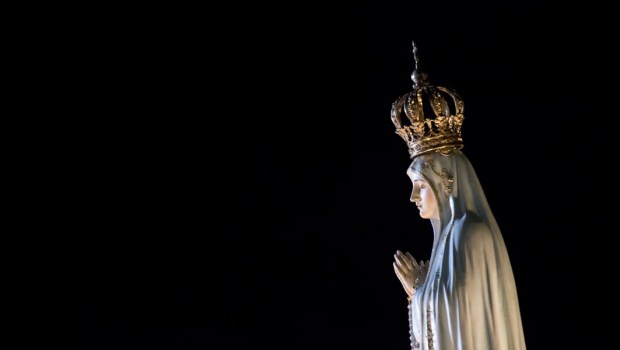
OUR LADY OF FATIMA STATUE
facebooktwitter-xemail
Tom Hoopes - published on 07/10/17
facebooktwitter-xemail

What Our Lady of Fatima did that day inspired many to convert, but provoked others to reject the faith.This week marks the 100th anniversary of the most controversial apparition of Our Lady in Fatima, Portugal.

What she did that day inspired many to convert but provoked others to reject the faith out of hand. It made some people a little nutty and won the begrudging respect of others.

July 13 was the day Our Lady scared the daylights out of three shepherd children by showing them hell and sternly warning them about a second global war and a new age of martyrdom.

But the surprising — and surprisingly harsh — July 13, 1917 apparition changed the faith of the Church in our time.

First: July 13 returned hell to the center of Catholic consciousness.

Little Lucia dos Santos was 10 when Our Lady of Fatima began to appear to her every 13th of the month starting in May, 1917, along with her cousins Francisco and Jacinta Marto, 8 and 7.

But in July, instead of just exhorting the children to say the Rosary and pointing them to heaven, she showed them a terrible sight.

“We saw as it were a sea of fire,” Lucia wrote. “Plunged in this fire were demons and souls in human form … amid shrieks and groans of pain and despair, which horrified us and made us tremble with fear.”

To give Our Lady of Fatima credit, the vision of hell only happened after a year of preparation, including visits by an angel and much reassurance about heaven. But the vision so badly rattled Jacinta, especially, that it seemed to change her personality utterly.

The only thing that would make this vision okay, and not an example of emotional abuse, is if hell were a real place and we were in eminent danger of ending up there if we don’t do something drastic.

It is. We are.

Second: She reiterated the most unpopular — and most important — message of Christianity.

The messages of Jesus (Mark 1:15), John the Baptist (Matthew 3:1-2) and Peter (Acts 2:38) were all the same: “Repent!” Jesus defined the Church’s mission as preaching “repentance, for the forgiveness of sins” (Luke 24:47).

Yet every pope from Pius XII to Francis has said “the sin of the century is the loss of the sense of sin.”

The refusal to repent — the belief that sin doesn’t really matter — is at the heart of the major moral disasters of our time, from abortion to human trafficking, from the pornography epidemic to the urban violent crime rate. Those who see no wrong do terrible things.

Our Lady of Fatima’s vision of hell is an absolutely necessary corrective to the presumptuous expectation that we are all going to heaven no matter what. It is true that God wants to forgive everybody. But one thing stops him: We don’t repent.

Third: Our Lady of Fatima de-romanticized war.

“This war will end,” Our Lady of Fatima told the children in July, “but if men do not refrain from offending God, another and more terrible war will begin.”

Whatever they understood about the particulars, the general sense of this message was clear to the children: War isn’t an occasion for God to reward victors, but to punish sin.

The “reward” paradigm had existed for a long time in Christian history: From Charlemagne to Joan of Arc, from Notre Dame des Victoires to the Conquistadores. Every Christian culture had their Robin Hood and King Arthur figures: Heroes of the unconventional virtues of clever violence.

But Our Lady of Fatima poured cold water on all of that. Martial virtues are real, but they are an example of God bringing good out of evil — not of God’s will being won by violence.

Finally, July 13 de-romanticized martyrdom.

For that matter, Our Lady of Fatima also level-set our understanding of martyrdom.

In the at-home movies era, many of us are only now watching Silence by Martin Scorcese, which follows a Jesuit’s disillusionment as he looks for glory in the persecutions of Japan and finds soul-numbing horror instead.

Our Lady of Fatima taught that lesson 100 years ago.

The children saw a vision of the pope “half trembling with halting step, afflicted with pain and sorrow,” praying for the corpses he stumbled past until he was himself shot. Our Lady knows that in heaven martyrdom is glorious — and that on earth, it is painful and sad.

The meaning of all of this was not lost on the three shepherd children.

They learned that it was absolutely urgent that they console Jesus, convert sinners and commit to Mary.

July 13 is only part of their story — a story that includes far more consolation than condemnation and was meant for every generation, including ours.

 

Pope Francis’ powerful legacy for Medjugorje

Magnus MacFarlane-Barrow 
1

For the millions of people whose lives have already been changed through visiting Medjugorje since 1981, the Nihil Obstat for its ‘spiritual proposal’ was a cause of great joy and encouragement.

There have been many beautiful things written about Pope Francis’ legacy in the last few weeks. Various experts have, quite rightly, highlighted his efforts to ensure every human person feels welcome in the Church, his prioritisation of the poorest and most marginalised people, his reminders to us that God is rich in mercy, and his constant pleas for peace.

I’d like to suggest, however, that another monumental part of his legacy has been largely absent from the commentary. It was during Pope Francis’ pontificate that the Church finally granted its Nihil Obstat for the “spiritual proposal” made in Medjugorje.

For the millions of people whose lives have already been changed through visiting Medjugorje since 1981 (myself included) this was a cause of great joy and encouragement, whilst many who preferred to wait for clearer guidance from the Church before making a pilgrimage there have now been given their “green light”. It is expected that the already huge number of pilgrims visiting this small village in Bosnia-Herzegovina will now grow even greater.

The truly remarkable document expressing the Nihil Obstat was approved by Pope Francis in August 2024 and published by the Dicastery for the Doctrine of the Faith on 19 September 2024. It is titled “The Queen of Peace” – the name Our Blessed Mother gave herself from the beginning of these apparitions, according to the visionaries – and much of it focuses on the multitude of good fruits born in Medjugorje. It states: “The uniqueness of the place lies in the large number of such fruits …” and goes on to say that “… works of charity have also arisen in connection with various communities and associations, particularly those that care for orphans, drug addicts, alcoholics, children facing various difficulties, and people with disabilities.”

Surely those of us involved in Mary’s Meals can, with great joy, recognise ourselves in this. Mary’s Meals has long been described as a fruit of Medjugorje (not just by me!) and we might also be grateful for various fruits in our own personal lives and families – conversions, healings, new life …

For me the greatest surprise on reading the document was to see a number of Our Lady’s messages being quoted directly, including this one on 25 February 1997:

“I call upon you, my children, to see who needs your spiritual or material help. By your example, my children, you will be the outstretched hands of God, which humanity is seeking.”

Mary’s Meals could have been a response to this message alone. When I read it, I think of the tens of thousands of hands outstretched each day in our simple, practical work of love – cooking and serving all those daily school meals for the world’s poorest children.

But the work of Mary’s Meals was not actually a direct response to any one specific message at Medjugorje, rather it was a very unexpected fruit born in the lives of people who were trying their best (and in my case often failing) to live the fundamental invitation being made by our loving mother at Medjugorje – to return to her Son Jesus with all our hearts, and to do this through prayer, fasting, Holy Mass, Confession, and Scripture. And this way be transformed by His love. Nothing we did not already know – but many things we desperately need reminded of, and encouraged in.

The last message that the Church points us to in “The Queen of Peace” says it beautifully:

“Dear children, my words are simple […] I am calling you to my Son. Only He can transform despair and suffering into peace and serenity. Only He can give hope in the deepest sorrows. My Son is the Life of the world. The more you come to know Him, the closer you come to Him, and all the more will you love Him because my Son is Love. Love changes everything; even that which seems insignificant to you apart from love is made most beautiful by love.” (2 September 2018)

This invitation to love, being made by Our Blessed Mother in Medjugorje is of the outmost importance for the world. With great urgency we need to respond to this “spiritual proposal” (as the document calls it) and re-discover how to love. And thus, re-learn how to live in peace.

Each day, amongst the increasing multitudes visiting Medjugorje from every corner of the world, faith is being re-born and many wonderful new choices are being made. And thus, the seeds of all sorts of wonderful fruit are being sown in great abundance. Fruit that can renew us, our Church, and the face of the earth.

It was a personal joy for me that it was Pope Francis who approved this document. His deep love of Our Blessed Mother was evident in many ways from the beginning to the end of his pontificate (and even afterwards given his choice to be buried in her Basilica in Rome, where it was deeply moving to see the children presenting her with flowers just before he was laid to rest near her icon). And several times he offered all of us in Mary’s Meals direct encouragement in our work. I won’t ever forget him gripping my arm tightly not long after he became Pope and saying with a beautiful smile “Avanti! Avanti! Avanti!” (Go forward!). It is striking how often his own urgent invitations – to prayer, to love our neighbour, to work for peace, to appreciate God’s creation – mirrored those of Our Lady.

For this great legacy you left the world, Pope Francis, we thank you with all our hearts.

And we thank you God for our new Pope Leo – who was elected last 8 May, such an important feast for Mary (Our Lady of Luján in Latinoamerica, Our Lady of Pompei in Rome) and who prayed an Ave Maria in his very first words of his pontificate – and for sending us your mother, full of a grace which is continuing to renew the face of the earth.

Our Lady Queen of Peace, pray for us.

Friday, 11 July 2025


Papal Nuncio celebrates historic Catholic Mass in Canterbury Cathedral


Papal Nuncio celebrates historic Catholic Mass in Canterbury Cathedral

CBCEW » Christian Unity » » Papal Nuncio celebrates historic Ca...

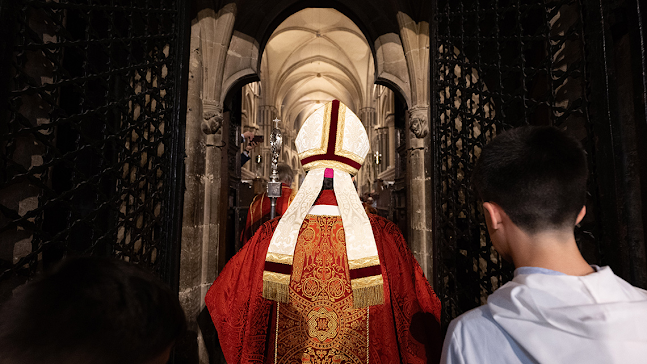
The Apostolic Nuncio, Archbishop Miguel Maury Buendía, Pope Leo’s representative to the Church in Great Britain, has celebrated a historic Catholic Mass in Canterbury Cathedral to mark the Translation of St Thomas of Canterbury.

The saint, more commonly known as Thomas Becket, was Archbishop of Canterbury from 1162 until his murder in 1170. He was killed by followers of King Henry II having quarreled with the monarch over the rights and privileges of the Church, and is venerated as a saint and martyr by both the Church of England and the Catholic Church. He was canonised by Pope Alexander III soon after his death.

In 1220, Thomas Becket’s body was translated, or moved, from Canterbury Cathedral’s crypt to the shrine behind the main altar, where it remained until 1538 when Henry VIII ordered the crypt be destroyed. Once a year, on 7 July, the Dean and Chapter of Canterbury Cathedral allow the Catholic Parish of St Thomas of Canterbury to celebrate Mass in honour of St Thomas Becket.

Although many Catholic Masses have been held at the famous Anglican cathedral, this was a historic ‘first’ in that it was the first time a papal nuncio had celebrated Mass there. It is particularly significant as a papal legate was said to have been present when the saint’s body was moved.

Preaching a homily on the feast marking the ‘translation’, Archbishop Miguel Maury Buendía said:

“This Mass of pilgrimage takes place within the context of the Jubilee Year. It highlights the Christian life as a spiritual journey, moving through life’s trials and joys with hope anchored in Christ. Having travelled as pilgrims today, we do more than just honour a figure from history. The stained glass windows all around us illustrate the many miracles attributed to St Thomas in the medieval period. This should be a living story, too. Our world, today as then, is in need of hope. We come in this Jubilee Year as ‘Pilgrims of Hope’ to be inspired by St Thomas’ holiness and his courageous witness to Christ and His Church.”


Third of all pregnancies in England and Wales end in abortion, figures reveal


Almost a third of all conceptions in England and Wales now end in abortion, official figures have revealed.

In 2022, 29.69 per cent of all conceptions in England and Wales ended in abortion, up from 26.54 per cent a year earlier, , according to figures released by the Office for National Statistics.

The figures represent a huge increase in abortion over the space of a decade, with 20.84 per cent of conceptions – a fifth of all pregnancies – ending in abortion in 2012.

Between 2020, when pills-by-post at-home abortion schemes were first introduced, and 2022, there has been a 19.61 per cent increase in the number of conceptions leading to abortion.

The ONS figures show there were 834,260 conceptions for women resident in England and Wales in 2022, and 247,703 of these conceptions led to abortion.

The figures show that the number of conceptions leading to abortion in 2022, was 13.15 per cent higher than 2021 when there were 218,923 abortions.

The number of conceptions ending in abortion in abortion in 2022 has increased by 34.31 per cent since 2012 when 184,420 conceptions ended in abortion.

The total number of conceptions has fallen since 2012 and the total number of abortions has risen over the same period, so the percentage of conceptions ending in abortion has increased by 8.85 percentage points, from 20.84 per cent in 2012 to 29.69 per cent in 2022.

Between 2020 (the first year in which the pills-by-post scheme was made legal) and 2022, there was a 19.61 per cent increase in the number of conceptions leading to abortion.

The percentage of conceptions ending in abortion was lowest among women aged 30-34, but still sharply increased from 13 per cent of conceptions ending in abortion in 2012 to 20.53 per cent in 2022.

The percentage of conceptions ending in abortion among those outside marriage or civil partnership increased from 29.4 per cent in 2012 to 36 per cent in 2022.

The percentage of conceptions ending in abortion among those within marriage or civil partnership increased from 7.6 per cent in 2012 to 11.1 per cent in 2022.
The percentage of conceptions leading to abortions were highest in Liverpool (40.3 per cent), Brighton and Hove (40.3 per cent), Lambeth (38.4 per cent); Halton, Cheshire (38.1 per cent), and Knowsley, Liverpool (38 per cent).

Catherine Robinson of Right to Life said: “Almost 1 in 3 of all conceptions now end in abortion. This is a national tragedy.

“The dramatic rise in the reported percentage of conceptions ending in abortion has accompanied the second full year that abortion services outside of a clinical setting through pills by post schemes have been operating in England and Wales.

“The vote to make at-home abortions permanently available passed by just 27 votes. A large number of MPs had serious concerns about the negative impact these schemes would have on women.”

Last month the House of Commons voted for abortion up to and during birth when a hijacking amendment at Report Stage of the Crime and Policing Bill to decriminalise abortion was passed by 379 votes to 137, a huge majority of 242.

The Bill was introduced principally to combat violence, especially against women, and to halt the scourge of knife crime but has been amended to allow abortions for any reason whatsoever and at any point in pregnancy.

But Tonia Antoniazzi, the Labour MP for Gower and a Catholic, introduced the amendment to decriminalise abortion so women who undertook late-term pregnancies with such pills would no longer be sent to jail.

She said: “Let’s ensure that not a single desperate woman ever again is subject to traumatic criminal investigation at the worst moment in their lives.”

Dr Caroline Johnson, the Conservative MP for Sleaford, failed to pass an amendment that would have reinstated in-person consultations and halted the “pills by post” scheme that has been criminally abused.

Crossbench Lord Alton of Liverpool, a Catholic, said: “This hasty change will have profound implications for the way that longstanding law in this country will operate.

“We know that there are potential real risks for the safety of women in particular who will be encouraged towards DIY abortions.

“I expect that colleagues in the House of Lords will wish to scrutinise its provisions very closely and to amend it as necessary to make it safe.”

Twelve other Catholic MPs voted for abortion up to birth.

They included Dan Aldridge, Labour MP for Weston-super-Mare; Kevin Bonavia, Labour MP for Stevenage; David Chadwick, Liberal Democrat MP for Brecon, Radnor and Cwm Tawe; Colum Eastwood, the SDLP MP for Foyle; Florence Eshalomi, the Labour [Co-op] MP for Vauxhall and Camberwell Green and Claire Hanna, SDLP MP for Belfast South and Mid Down.

They also included Rebecca Long Bailey, Labour MP for Salford; Dame Shiobhain McDonagh, Labour MP for Mitcham and Morden; Andy McDonald, Labour MP for Middlesbrough and Thornaby; Pat McFadden, Labour MP for Wolverhampton South East; Oliver Ryan, Independent MP for Burnley, and Dr Ben Spencer, Conservative MP for Runnymede and Weybridge.


Wednesday, 9 July 2025


The Fallacy of Private Religion

Catholic Twitter recently enjoyed a rare moment of unity when Labour MP Chris Coghlan used the platform to announce his own excommunication. The politician had been warned by his priest, Fr. Ian Vane, that a vote in favor of the U.K.’s assisted suicide bill would remove him from a state of grace in the eyes of the Church. Coghlan ignored the warning, and Fr. Vane accordingly denied him the sacraments. The priest rebuked Coghlan by name before his congregation, which provoked this much more public counter-announcement. At the top of Coghlan’s mind (apparently much higher than any thoughts of self-examination or repentance) was the fear that Fr. Vane would no longer sign off on his children’s Catholic education. But he wished to assure everyone that “My private religion will continue to have zero direct relevance to my work as an MP representing all my constituents without fear or favour.” 

If Coghlan was expecting sympathy from the public, he was sorely disappointed, though it appears his bishop has gone into damage control mode. Not much has changed since 2014, when the English and Welsh bishops’ conference scrambled to reassure parliamentarians that there were no plans to deny the Eucharist to any MP voting in favor of same-sex “marriage.” In an ideal Britain where the Church had its house in order, Fr. Vane’s decision wouldn’t have made news. 

What does “private religion” consists of in Coghlan’s mind? Clearly it does not extend to the defense of such complex doctrines as “Don’t poison the terminally ill.” Coghlan also chose to abstain from voting altogether on a bill legalizing abortion up to birth, which was apparently just too knotty for him to work out a firm position either way. “Religion,” for Coghlan, appears to be little more than aesthetic window dressing around his true identity: a politician who tells people exactly what they want to hear.

But this is perfectly consistent with liberal individualism, which, as Conservative MP Danny Kruger has observed, is now England’s de facto “governing faith.” Kruger provides an apt contrasting case study with Coghlan, as an adult convert to evangelical Christianity whose “private religion” very much has “direct relevance” to his work. From the beginning of his career, which began only after years spent running a charity for ex-prisoners, Kruger accepted matter-of-factly that he would be “unfashionable.” He has even faced public ridicule for being at odds with his own mother, Great British Baking Show judge Dame Prue Leith, on assisted suicide. Such is the price of carrying a fully integrated faith into the public square.

Coghlan’s hackneyed relegation of religion to the “private” sphere implies that religion is fundamentally irrational, its moral strictures purely arbitrary. If a Christian MP like Kruger takes a stand against abortion or assisted suicide, it is presumed that he has allowed his faith to blind his reason. Politicians like him are thus placed under pressure to “come out” and admit this, as if it constitutes a damning conflict of interest. But as Kruger wrote in an eloquent short reflection for the Spectator, the reasons for his pro-life stance are, as it were, open-access. It’s not difficult to form a natural law argument against euthanasia, and Christians shouldn’t make it so by causing the good sort of atheist humanist to second-guess himself. And indeed, some atheists have ironically seen the argument with clearer eyes even than some faithless clerics.

But what is epistemically open to the atheist may still depend on theism for its ontological grounding. And when that religious foundation is removed from under a society, abandoned even by its men of the cloth, the house collapses. Hence, Kruger’s warning about what is being irrevocably lost as England wanders ever further from its Christian mooring posts. It is possible for someone of no faith to swim against the current and choose life, but it requires levels of toughness and intellectual integrity that are in scant supply, as Coghlan’s case illustrates. When liberal individualism becomes the state religion, few people will be motivated to defect unless they can link arms with a large body of fellow defectors. This was why Michel Houellebecq found himself almost exclusively in the company of Christians when he made his own iconoclastic case against euthanasia. There is only one Michel Houellebecq, but there are many Christians.

Siding with Coghlan’s priest, Melanie McDonagh writes that “any conscientious individual” could have pushed back against the suicide bill “on prudent and rational grounds, without any spiritual motivation whatever, unless we are to assume that concern for vulnerable people is a Christian prerogative.” It may not be a Christian prerogative, but it is often the purview of Christians in practice. The uncomfortable question asks itself: Why? Apparently not a question that will trouble the bureaucrats potentially in charge of shutting down Britain’s Catholic hospitals that defy the secular state’s holy writ. 

“Here is our enemy,” Kruger writes in an echo of Evelyn Waugh, “all disguise cast off.” Here now is the politics of “progress” come to full fruition. Against this new creed, only the old creed will suffice.