Sunday, 7 August 2022


Lambeth Conference: Welby unites bishops with compromise on sexuality


Congo's Archbishop Titre Ande addressed the Lambeth congress on Saturday, with Justin Welby also on the platformIMAGE SOURCE,NEIL TURNER FOR THE LAMBETH CONFERENCE
Image caption,
A rare global gathering of Anglican bishops from across the world has taken place in Canterbury

A mood of unity and self-satisfaction is prevalent at the end of this rare gathering of more than 650 Anglican bishops - they had come from all over the world, many from Africa where Anglican Christianity is growing at its fastest.

The Lambeth Conference is the once-a-decade meeting of bishops representing the many churches in the Anglican Communion and is chaired by the Archbishop of Canterbury.

Delays meant this was the first since 2008 and there had been speculation tensions could run high, with the risk even of division or the fracturing of the communion that represents more than 80 million people worldwide.

Though the conference, which ends on Monday, was devoted to a gamut of issues, the jeopardy surrounded a predictable question which, nevertheless, many conservative churches said they saw as fundamental: homosexuality and same-sex marriage.

In fact, the reason the conference didn't take place in 2018 was because it was felt the communion was not ready to find a way forward on the issue.

For years, this community has wrestled with it, and now just a handful of the 46 churches in the communion conduct or bless same-sex marriages, and only a small minority allow gay clergy.

The archbishops of Nigeria, Rwanda and Uganda boycotted this Lambeth Conference over the issue, protesting that any "recognition of homosexual relations" was biblical revisionism.

But if the ambition had been to hold things together among those who did attend, the Archbishop of Canterbury, Justin Welby, appears to have found the formula for now.

Pragmatism

It was set out in a pivotal speech in which, on the one hand, he reaffirmed a resolution passed by the Lambeth Conference in 1998 which said same sex marriage was wrong and "homosexual practices" are incompatible with scripture.

On the other hand, Archbishop Welby also said that churches (like those in Wales and Scotland) which moved away from that historical teaching, would not be sanctioned or condemned.

His focus appeared to be pragmatism, suggesting that for some churches it could even be dangerous to reform on same-sex marriage.

"For them, to question this teaching is unthinkable, and in many countries would make the Church a victim of derision, contempt and even attack. For many churches, to change traditional teaching challenges their very existence," he said.

Archbishop of Canterbury Justin Welby speaking at the Lambeth Conference in Canterbury, 5 August 2022IMAGE SOURCE,RICHARD WASHBROOKE/LAMBETH CONFERENCE MEDIA/PA WIR
Image caption,
Justin Welby gained a standing ovation for his speech which addressed sexuality

But equally, the archbishop said that in other countries it could be a reluctance to reform that is just as unthinkable and a similar threat to the Church.

Liberal and conservative bishops came together to give Archbishop Welby a standing ovation and a crisis seemed to have been averted.

Toksvig love appeal

But one of the two positions he validated sees people who happen to be gay as fundamentally unequal. As much as the Archbishop of Canterbury may have quelled some fires within the Anglican communion, the ramifications of what he says go far beyond the Church.

In her impassioned open letter to Archbishop Welby, Sandi Toksvig told of her dismay.

She said the signals he sent, in reaffirming the Church's long-held position that gay marriage was wrong, and that same-sex relationships defied scripture, put lives at risk. She cited the fact that young gay and transgender people were already much more likely to contemplate suicide.

Sandi Toksvig
Image caption,
Sandi Toksvig said Archbishop Welby had made a"mistake"

"Do you know why? For many it's because they don't feel loved and love, Justin, is supposed to be at the core of what you do," the broadcaster said.

In her view, the archbishop had favoured unity of the institution ahead of doing the right thing.

However, the Archbishop of Canterbury does not have any power to issue directives. The Church of England is just one of many churches in the communion and the archbishop is defined as "first among equals" within it.

But as the historical centre, the seat of Anglicanism, the Church of England and its primate do at least have the powerful opportunity to influence by example.

It happened with the role of women, where some Anglican churches internationally took their lead from the Church of England in ordaining women, to the point where nearly 100 of those attending this Lambeth Conference were women, five times more than the last one.

On same-sex marriage though, the Church is in no position to urge others to change because it has not done so itself. A consultation process is due to report later this year, but gay rights advocates within the Church are not confident it will lead to equality.

The Archbishop of Canterbury Justin Welby leads the opening service of the 15th Lambeth Conference at Canterbury cathedral in Kent, 31 July 2022IMAGE SOURCE,PA MEDIA
Image caption,
Justin Welby led the opening service of the conference

Given the countries in which Anglicanism is growing, it is conservative views that are growing globally. Conservative Anglican churches in Africa or Asia will not, of course, have any say in the Church of England process. But if gay marriage is allowed in the Church here, it could well strain relations.

Some conservative African bishops at the conference suggested that if the Church of England allowed gay marriage it would leave them, and not English bishops, as the true Anglicans.

"We will be the ones coming to England and going to Canterbury. Let those with a revisionist theology go and form something else," the Archbishop of South Sudan, Justin Badi, told me, drawing comparisons with the way in which missionaries had journeyed to Africa.

Existential threat

Many other bishops at the conference bristle at the fact there has been so much focus in the media and outside world on the issue of sexuality.

They point to the fellowship and collaboration on issues like poverty and conflict that has been fostered during the conference, and give those as important examples of why it is crucial to keep the communion together.

But it is Justin Welby himself who talked about the issue of same-sex marriage as being a potential existential threat to the church - in some countries if churches challenge the hard line historical position on it, in others if they do not make progress.

The archbishop may well have been talking about his own Church in the latter category, as one of those that needed to reform if it is to stay relevant and avoid being subject to contempt.

He may feel that he has made a significant compromise by saying national churches choosing to conduct same-sex marriages will not be sanctioned, but here at home, even just by entertaining and reaffirming a position that allows gay people to be viewed unequally, as he did at this conference, he risks doing precisely what he says should be avoided.


GENE'S PHOTO OF THE WEEK


Letter from the Archbishop of Canterbury to the Bishops of the Anglican Communion

02/08/2022

The Archbishop of Canterbury has written to all of the bishops of the Anglican Communion ahead of the Lambeth Conference discussion today on Human Dignity. Here is the text of his letter:

Dear Sisters and Brothers in Christ,


Lambeth Conference 2022 :  God’s Church for God’s World – Listening, walking and witnessing together


As the Lambeth Conference continues I give thanks to God for our time together, online and in person, and I express again my sadness that not all of Anglican Bishops and spouses are participating. Above all, I feel this gathering is affirming that we belong to one another in Jesus Christ, and that as Anglicans we are called to share his Good News with a world in need - across a great diversity of cultures and contexts. May God's Holy Spirit inspire and empower us to share Christ's love with all those we are called to serve in the challenging years ahead. 

I wanted to write this letter to you now so that I can clarify two matters for all of us. Given the deep differences that exist within the Communion over same-sex marriage and human sexuality, I thought it important to set down what is the case. I write therefore to affirm that the validity of the resolution passed at the Lambeth Conference 1998, 1:10 is not in doubt and that whole resolution is still in existence. Indeed the Call on Human Dignity made clear this is the case, as the resolution is quoted from three times in the paragraph 2.3 of the Call on Human Dignity.

The Call states that many Provinces – and I think we need to acknowledge it’s the majority – continue to affirm that same-gender marriage is not permissible. The Call also states that other provinces have blessed and welcomed same sex union/marriage, after careful theological reflection and a process of reception.

In that way, the Call states the reality of life in the Communion today. There is no mention of sanctions, or exclusion, in 1.10 1998. There is much mention of pastoral care. We have a plurality of views. As Lambeth 1.10 also states: “all baptised, believing and faithful persons, regardless of sexual orientation are full members of the Body of Christ” and to be welcomed, cared for, and treated with respect (I.10, 1998).

What is also clear is that Lambeth 1.10 itself continues to be a source of pain, anxiety and contention among us. That has been very clear over the course of this Lambeth Conference. That is also part of the current reality of our Communion. To be reconciled to one another across such divides is not something we can achieve by ourselves. That is why, as we continue to reflect on 1 Peter, I pray that we turn our gaze towards Christ who alone has the power to reconcile us to God and to one another. 

There is of course much more to reflect on after the Conference and I will be writing to you all again after I have had the opportunity to reflect further.  For now, on this matter on which we are so divided, I want to repeat a sentence from the Call: "As Bishops we remain committed to listening and walking together to the maximum possible degree, despite our deep disagreement on these issues." 

Let us abound in love for all, for our brothers and sisters are never our enemies. Let us above all focus on the great issues - which we discussed with much energy - of being God’s Church for God’s world, serving with humility and grace and bringing glory to the one who when we were still sinners died for us (Romans 5:8).

Your brother in Christ

Justin Cantuar:

Saturday, 6 August 2022


Priests And Religious In Purgatory 

How these souls have shaped the Catholic practice of helping purgative souls.

Despite the Protestants and some modernist Catholics, purgatory exists, it is described in the Bible in several different ways, although the writers do not identify it with the modern name; the faithful have believed in it since the beginning of Christianity.

We have made a video about this.

And there is a recurrent fact of saints and mystics receiving visits of souls from purgatory so that with prayers, Masses, and penances, the saints could help them to ascend to Heaven more quickly.

When souls manifest, you only have to ask them what they want, without entering into a dialogue, making the request.

And what happens to the souls of priests and religious in purgatory? Do we have any special teaching about what happens to them?

They are special, because from the experiences with them, we have a kind of protocol, on how each of us can help the souls of relatives and friends who could have fallen into purgatory.

Here we will talk about the mystical experiences that have happened with souls in purgatory of priests and religious, and how contact with them shaped the specific Catholic practice of helping poor souls in purgatory.

Purgatory is a dogma of faith and therefore belongs to the inalienable heritage of the Creed of the Church.

Christians have believed it since the beginning of their history.

Saint Perpetua, who suffered martyrdom in the year 203, allows us to know that the first Christians already believed in purgatory and in the value of praying for the dead.

Her dead brother Dinocrates appeared to her in a deplorable state, she prayed for him, and then had the vision that told her that he had been released from purgatory.

An angel said to St. Bridget of Sweden, “Blessed is he who, while still living on earth, helps purgative souls with prayers and good deeds.”

And voices from purgatory have thanked those who brought them those reliefs.

And Jesus himself explained to Saint Catherine of Siena how to help the poor souls in purgatory “through alms, Divine office, fasting, and prayers” that “can shorten the time of their sorrow, trusting in my mercy.”

And the same goes for the priests and religious who are in purgatory?

Maria Simma was asked if there were priests and religious in purgatory.

And she replied that there are many.

Often they are in purgatory for not having respect for the Eucharist, for having neglected prayer, for having diminished their faith.

Maria Simma tells of an unforgettable encounter with a priest whose right hand was black. 

She asked why and he replied, “I should have blessed more.”

Santa Margarita María de Alacoque was presented with a soul wrapped in flames.

He was a Benedictine religious who had once heard her Confession, and God allowed him to go to her, to alleviate his pain, asking her to be by his side for three months.

Saint Margaret’s suffering was terrible in those three months, but at the end of them she saw him again very different, full of joy and surrounded by glory.

He thanked her, promised her that he would protect her before God, and immediately she was cured of an illness she had.

And a monsignor appeared to Santa Francesca Cabrini after his death, when she was about to take Communion.

And he told her, “You will do this Holy Communion for me.” 

For a month the same request was repeated, and at the end of the month she saw him smiling and heard him say, “Now enough, I thank you, so far you have helped me, from now on I will help you.”

There is also the case of a priest who, due to the carelessness of the sacristan, was locked up all night in the Cathedral of Messina, without having the key to get out.

Then resigned, he settled into the confessional to sleep.

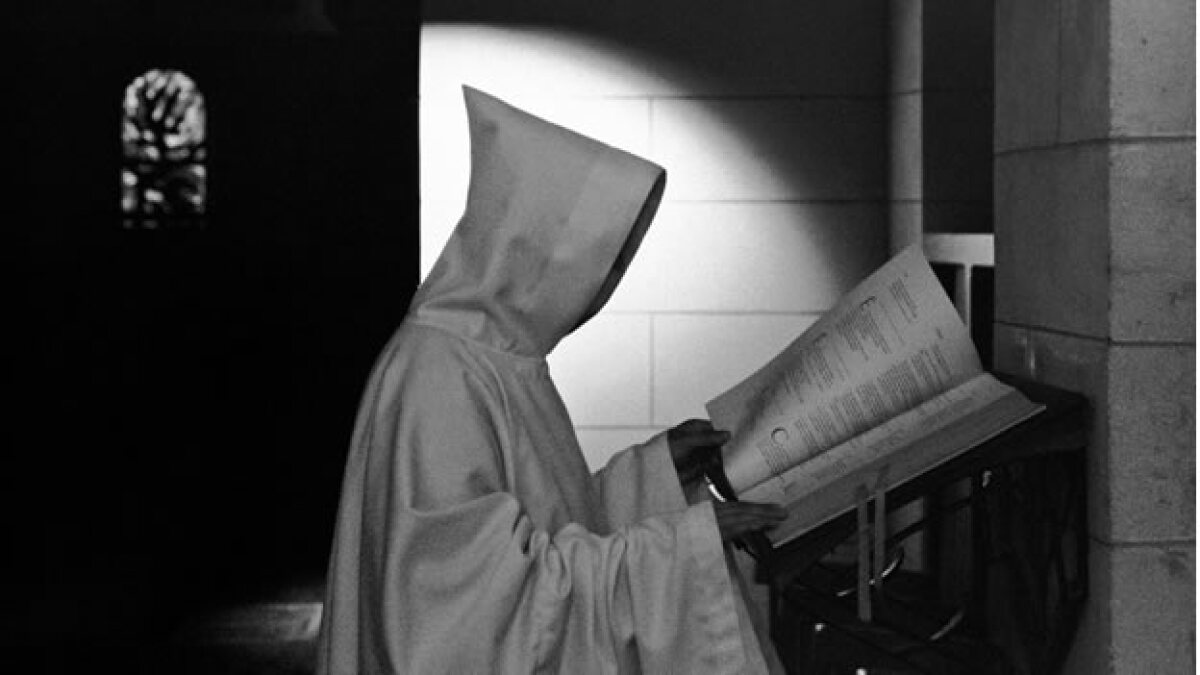
At midnight the bells rang and a hooded monk emerged from a niche in the wall and walked towards the altar saying aloud, “There is a priest here, to celebrate a Mass for my suffering soul in purgatory!”

This was repeated every hour. Until the priest came out of the confessional and said, “yes, I’ll do it.” [scroll for more]

He went to the altar and found everything prepared for the Mass; he dressed and offered the Mass for the intention of repose of the monk’s soul.

And after finishing Mass, he heard a voice say, “I can’t thank you enough for what you have done for me. For 145 years I have come here asking someone to help me. Tonight I will be in Heaven for your Mass and your act of charity.”

And he added, “by the Grace of God I will show you my gratitude by warning you when your own death approaches.”

The priest told three friends about the event but they did not believe him.

Amos 5:8 He who made the Pleiades and Orion, who turns midnight into dawn and darkens day into night, who calls for the waters of the sea and pours them out over the face of the land— the Lord is his name. ...(photo - constellation of Orion)After a few years, the priest called his three friends and told them that he was going on a trip.

They asked him, “when are you coming back?”

And he said, “Never”

And he reminded them how the monk had promised him that he would reveal the day of his death three days before, and so it happened.

Padre Pio, who had a large number of visits from souls in purgatory, had a peculiar encounter with a soul from a monk’s purgatory.

One night when he was absorbed in prayer in the choir, he was disturbed by the sound of footsteps and candles and vases being moved on the high altar.

And yelled, “Who is it?”

No one answered, but after a while, the noises returned.

Then he stopped and saw a young brother doing some cleaning.

He asked “who are you?”

And the young monk answered, “I am a brother of yours who did the novitiate here, my mission was to clean the altar during the year of the novitiate. 

“Unfortunately, I did not bow down to Jesus in the Blessed Sacrament as I should have done, as I passed in front of the altar. Because of this serious oversight, I am still in purgatory.” [For our discernment]

And he continued,

“Now, God, by his infinite mercy, sent me here so that you can decide the time from when I can enjoy Paradise. And for you to take care of me.”

Then Padre Pio replied, “You will be tomorrow morning in Paradise, when I celebrate the Holy Mass.”

However, that response later produced a deep wound in Padre Pio’s heart, which he felt throughout his life, because he could have sent that soul immediately to Heaven, but he condemned him to remain one more night in the flames of purgatory.

Another case happened to the Dominican Blessed Enrique Suso.

He had a fellow seminarian with the same desire for holiness as him, and they formed a close friendship.

When they finished their studies and were going to separate to different destinations, they promised each other that the first of the two to die would assist the other for a whole year, with the celebration of two Masses each week.

The friend was the first to be called and Blessed Suso received the news with feelings of resignation to the Divine Will.

But time had made him forget the deal, however he prayed a lot for his friend, imposing penance on himself.

And one morning, while he was meditating, he suddenly saw the soul of his deceased friend appear, who, looking at him with tenderness, reproached him for having been unfaithful to his word, in which he had trusted.

Blessed Suso, surprised, apologized for his forgetfulness, saying of the many prayers and mortifications he had offered.

But the friend replied that they were not enough. [scroll for more]

He told him, “It is the Holy Sacrifice, which will deliver me from these dreadful torments. I beg you to keep your word and do not deny me.”

So Suso immediately contacted as many priests as possible and urged them to say Masses for his friend’s intentions.

The next day several priests joined him in offering the Holy Sacrifice for the friend.

And after a short time Suso’s friend appeared again in a very different condition, surrounded by a beautiful light.

And the resource of dedicating 30 masses for the souls in purgatory officially arose from an act of Saint Gregory the Great.

They are the Gregorian Masses to help the souls in purgatory to reach Heaven.

It happened that a monk named Justus had accepted three gold coins for curing a person, breaking the vow of poverty.

Justus repented, fell ill, and died.

And Saint Gregory had him buried outside the walls of the cemetery, to instill in his religious a great horror of this sin.

But after a few days, he thought that perhaps he had been too strong in his punishment and ordered thirty Masses to be celebrated in a row, without letting any day pass, for the soul of the deceased Justus.

And the same day that the thirty Masses were finished, Justus appeared to another monk, Copioso, telling him that he was ascending to Heaven, free from the pain of purgatory, due to the thirty Masses celebrated for him.