Monday, 5 March 2012

Weekend ... Eddie Cochran

Weekend  ...  Eddie Cochran


http://www.youtube.com/watch?v=woyX0WXcunQ

"Weekend" is a song by Eddie Cochran. It was recorded in April 1959 and released posthumously as a single in the UK on London HL-G 9362 in June 1961. In the US it was released on Liberty Records 55389 in December 1961. The song was written by Bill and Doree Post. This was the last single released in the US with original material by Eddie Cochran.

Weekend"
Single by Eddie Cochran
from the album Never to Be Forgotten
B-side"Lonely"
ReleasedDecember 1961
Format7" 45rpm
RecordedApril 1959
LabelLiberty Records 55389
Writer(s)Bill Post
Doree Post
Eddie Cochran singles chronology
"Lonely"
(1960)
"Weekend"
(1961)

It was covered in 1968 by The Move and appears on their eponymous album.

Lord St John of Fawsley dies aged 82

Lord St John of Fawsley dies aged 82

Tributes paid to Lord St John of Fawsley

Norman St John-Stevas with then Conservative Party leader Margaret Thatcher at the state opening of Parliament in March 1979 Norman St John-Stevas with Margaret Thatcher at the state opening of Parliament in March 1979
Tributes have been paid to former Conservative minister Lord St John of Fawsley, who has died aged 82.

As Norman St John-Stevas, he served as education and arts minister under Edward Heath and as Commons leader in Margaret Thatcher's first cabinet.
Mrs Thatcher sacked him in 1981 and he entered the Lords in 1987.
Justice Secretary Ken Clarke called Lord St John a "good minister" and former Deputy Prime Minister Lord Heseltine said he was a "one-off".
Lord St John made a lasting mark on the House of Commons by creating the select committee system, which scrutinises the business of government departments.
'Theatrical'
But he opposed aspects of Mrs Thatcher's monetarist economic policies and left the government as Lady Thatcher culled "wets" who were not seen to be "one of us".
 

LORD ST JOHN'S CAREER

  • Educated at Ratcliffe College; Fitzwilliam College, Cambridge; and Christ Church, Oxford
  • Barrister
  • MP for Chelmsford, 1964 to 1987
  • Minister for education and arts and Leader of House of Commons
  • Ennobled 1987
  • Chairman of the Royal Fine Art Commission
  • Master of Emmanuel College, Cambridge
  • Chairman of Booker Prize judges
  • Editor of literary works of Victorian constitutional theorist Walter Bagehot
Afterwards he served as chairman of the Royal Fine Art Commission and master of Emmanuel College, Cambridge.
He was a prolific author and a prominent Catholic, a chairman of Booker Prize judges and the editor of the definitive edition of the literary works of the Victorian constitutionalist Walter Bagehot.
Lord St John also became a close confidant of the Royal Family.
Mr Clarke told the BBC: "He was very flamboyant and had a style all of his own, which was very theatrical, but actually he was an intelligent, sensitive man.
"He was a very, very good minister and he had very, very clear political opinions.
"It was almost eccentricity - his lifestyle. But his politics were very sound, very civilised, very mainstream, and he was a very nice guy. I shall miss him a lot."
'Wise figure'
Lord Heseltine said: "He was a one-off, a very unusual character, combining intellect and academic talent with the realities of politics.
Lord St John of Fawlsey, with Prince of Wales, in 2001 Lord St John was a confidant of the Royal Family
"He also had a great sense of humour. As a cabinet minister he used to sit at the far end of the Cabinet table and it was quite frequent that there would be an eruption of laughter from that quarter at something he said.
"That used to annoy the prime minister, but Norman had the great skill of being able to rephrase a joke to make it sound wholly innocuous."
Lord Tebbit, a former Conservative Party chairman, said: "He did a great deal as a clear and outspoken advocate in government for the arts."
The Conservative Leader of the Lords, Lord Strathclyde, said: "He was a great parliamentarian and will be missed by all who knew him in both houses of Parliament.
"He was a colourful, deeply spiritual and wise figure whose greatest legacy to the House of Commons remains the select committee, which he created in 1979 as leader of the House."
Former Conservative chancellor Lord Lamont of Lerwick, who began his government career as parliamentary aide to Lord St John, said: "Norman St John-Stevas brought wit, style, elegance and colour to politics. But behind the light-hearted exterior there was a razor-sharp mind, firm principles and deeply-held convictions.
"He was a notable parliamentarian and, as leader of the House, introduced many important reforms."
A spokesman for Lord St John's family said he had died at his home in London on Friday after a short illness.

Sunday, 4 March 2012

Theologian who said God is Dead, dies...

Theologian, who said `God is Dead,’ dies at 87


Show Caption | | Details
William Hamilton, who died Tuesday, considered himself a Christian, but did not go to church. Religion News Service photo by Ross William Hamilton/The Oregonian.

PORTLAND, Ore. (RNS) William Hamilton, the retired theologian who declared in the 1960s that God was dead, died Tuesday (Feb. 28) in his downtown Portland apartment. He was 87.
Hamilton said he'd been haunted by questions about God since he was a teenager. Years later, when his conclusion was published in the April 8, 1966, edition of Time Magazine, he found himself at the center of a theological storm.
Time christened the new movement "radical theology," and Hamilton, one of its key figures, received death threats and inspired angry letters to the editor. He lost his endowed chair as a professor of theology at what was then Colgate Rochester Divinity School in 1967.


Hamilton moved on to teach religion at New College in Sarasota, Fla., and then joined the faculty at Portland State University in 1970. He taught classes in religion, literary criticism and death and dying for the next 14 years.
"He was a gifted and inspiring teacher, a person of vibrant and wide-ranging intellect," says Ronald Carson, who met Hamilton in 1962 and has been his friend for 50 years.
Carson recalled hearing Hamilton speak for about 10 minutes and being "mesmerized."
"I have no idea what he said," he said, "but I remember going away from that session and thinking, 'I would love to be like him.'"
Hamilton was Carson's teacher at Colgate and recruited the younger man to teach at New College.
"He was curious, questioning, skeptical and sort of caused his students to take up that attitude toward what they were learning," said Carson, who now teaches in the honors college at the University of Texas at Austin. "I am missing him today."
In addition to teaching, Hamilton often spoke at churches, where Christians were struggling with the same questions that had spurred his studies. The image of God as all-knowing and all-powerful couldn't be reconciled with human suffering, especially after the Holocaust, Hamilton said in a 2007 profile in The Oregonian.
"I wrote out my two choices: 'God is not behind such radical evil, therefore he cannot be what we have traditionally meant by God' or 'God is behind everything, including the death camps -and therefore he is a killer.'"
He discovered that he no longer believed in an active God.
"The death of God is a metaphor," he said. "We needed to redefine Christianity as a possibility without the presence of God."
While Hamilton may have paved the way for the most recent wave of strident atheism, he wasn't a fan of best-selling writers who attacked religion in general or Christianity in particular.
"There is a self-righteousness, a glibness in their writing," he said. "They are too sure of themselves. They've backed themselves into a fundamentalist mode."
For his part, Hamilton saw himself as a Christian who no longer went to church.
"The death of God enabled me to understand the world. Looking back, I wouldn't have gone any other direction. I faced all my worries and questions about death long ago."
Hamilton is survived by his wife of 62 years and five children, eight grandchildren and four great-grandchildren. No funeral services are planned.

Mobile euthanasia units to make house calls ... now I've heard it all!

Dutch mobile euthanasia units to make house calls... now I've heard it all!

New scheme called 'Life End' will respond to sick people whose own doctors have refused to help them end their lives at home
Dutch euthanasia organisation Life-End will be offering its home services free of charge to Dutch citizens. Photograph: Etienne Ansotte/EPA
A controversial system of mobile euthanasia units that will travel around the country to respond to the wishes of sick people who wish to end their lives has been launched in the Netherlands.
The scheme, which started on Thursday , will send teams of specially trained doctors and nurses to the homes of people whose own doctors have refused to carry out patients' requests to end their lives.
The launch of the so-called Levenseinde, or "Life End", house-call units – whose services are being offered to Dutch citizens free of charge – coincides with the opening of a clinic of the same name in The Hague, which will take patients with incurable illnesses as well as others who do not want to die at home.
The scheme is an initiative by the Dutch Association for a Voluntary End to Life (NVVE), a 130,000-member euthanasia organisation that is the biggest of its kind in the world.
"From Thursday, the Life End clinic will have mobile teams where people who believe they are eligible for euthanasia can register," Walburg de Jong, a NVVE spokesman, said.
"If they do comply, the teams will be able to carry out the euthanasia at patients' homes should their regular doctors be unable or refuse to help them," he added.
The Netherlands was the first country to legalise euthanasia in 2002 and its legislation on the right to die is considered to be the most liberal in the world.
But doctors cannot be forced to comply with the wishes of patients who request the right to die and many do refuse, which was what prompted NVVE to develop a system to fill the gap.
Sick people or their relatives can submit their applications via telephone or email and if the patient's request fulfils a number of strict criteria, the team is then dispatched.
Legal guidelines state that the person must be incurably sick, be suffering unbearable pain and have expressed the wish to die voluntarily, clearly and on several occasions.
According to De Jong, the team will make contact with the doctor who has refused to help the patient to die and ask what his or her reasons were.
More often than not, he said, the motivations are religious or ethical, adding that sometimes doctors were simply not well enough informed about the law.
If the team is satisfied that the patient's motives are genuine, they will contact another doctor with whom they will start the euthanasia process.
"They will first give the patient an injection, which will put them into a deep sleep, then a second injection follows, which will stop their breathing and heart beat," De Jong said.
Every year 2,300 to 3,100 mercy killings are carried out in the Netherlands, although opponents of the practice claim the figure is much higher because many cases are not registered. The Royal Dutch Medical Association (KNMG) supports euthanasia in principle if there is no alternative, but has distanced itself from the NVVE initiative, arguing that giving it the name Life End will foster the idea that it is for those who it said are simply "weary of life" rather than those who are sick.
It has also questioned whether Life End doctors will have the chance to forge the necessary relationship with a patient to be able to ascertain whether or not his or her life should be ended.
But Jan Kuyper, of the Life End Clinic Foundation, said: "We're not trying to push any boundaries here." He said it was quite possible that the mobile teams would not end up carrying out a mercy killing, either due to medical questions about the case or if doubt is cast on the patient's motives.
Little is known about the Life End teams. But one of the team leaders is believed to be a 67-year-old retired doctor who carried out 20 mercy killings during his medical career.
The teams would be limited to one house visit a week to minimise the psychological burden on them.
In neighbouring Germany, where mercy killings are strictly illegal, euthanasia opponents were particularly vocal in expressing their outrage at the developments. "This is an inhumane proposal," said the German Hospice Foundation, while the group Life Rights for Everyone called it a "warped understanding of [the meaning of] autonomy".

Saturday, 3 March 2012

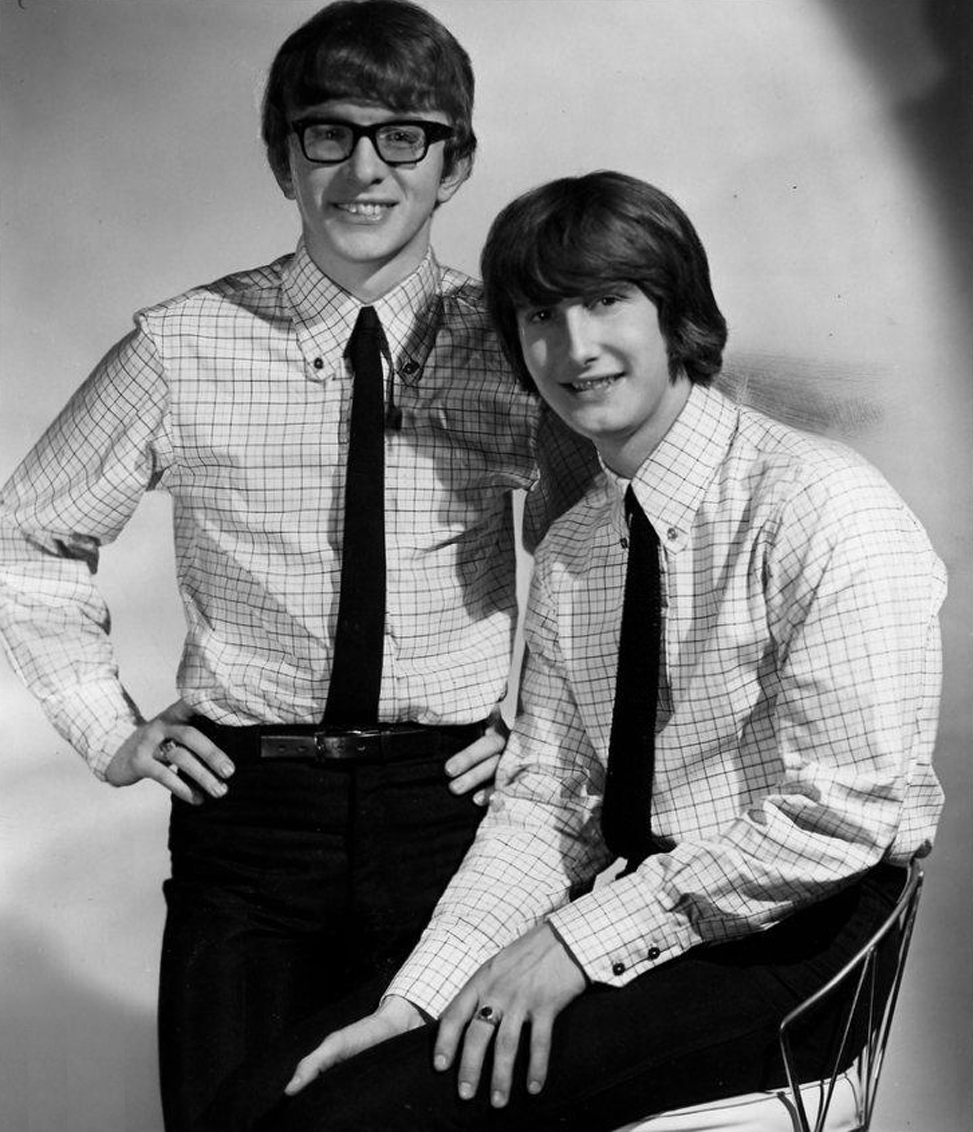
I Go to Pieces ... Peter & Gordon

I Go to Pieces ... Peter & Gordon


File:Peter and Gordon.jpg

I Go to Pieces

"I Go to Pieces"
Single by Peter & Gordon
from the album I Go to Pieces (U.S.)
B-side"Love Me Baby"
ReleasedNovember 1964 (UK)
December 1964 (US)
Recorded1964
Abbey Road Studios
GenreMerseybeat
LabelColumbia
Writer(s)Del Shannon
ProducerJohn Burgess
Peter & Gordon singles chronology
"I Don't Want to See You Again"
(1964)
"I Go to Pieces"
(1964)
"True Love Ways"
(1965)
"I Go to Pieces" is the title of a song written by Del Shannon which became a Top Ten hit for Peter and Gordon in 1965.

Contents

 [hide] 

[edit] Background and writing

Del Shannon had written "I Go to Pieces" for an R&B singer named Lloyd Brown whom Shannon discovered at a Michigan nightclub: Shannon arranged and produced Brown's recording but was unable to find a label interested in releasing the track. Shannon did attempt to himself record "I Go to Pieces" in the August 1964 session at Mira Sound Studios NYC which yielded Shannon's single "Do You Wanna Dance" and its B-side: "This is All I Have to Give"; however Shannon was unable to cut a satisfactory vocal of "I Go to Pieces" before the three hours booked for the session ran out.
"I Go to Pieces" passed to Peter and Gordon when that duo and Del Shannon shared the bill for a tour of Australia in the second half of 1964. Shannon played the Lloyd Brown recording of "I Go to Pieces" for the Searchers who were also on the tour and who Shannon hoped would want to record the song themselves. The Searchers were not interested in "I Go to Pieces" but Peter and Gordon heard the record and recognizing the song's potential to become a Merseybeat-style hit asked Shannon to let them record it. Peter and Gordon recorded "I Go to Pieces" at Abbey Road Studios with John Burgess producing; as well as Peter and Gordon themselves playing guitars the session featured Vic Flick on twelve string guitar.

[edit] Peter & Gordon

Released in the UK on 20 November 1964, "I Go to Pieces" became the second consecutive Peter and Gordon single to miss the UK Top 50 but like the preceding "Nobody I Know", despite missing the UK charts it became a hit in the US where the "British Invasion" craze was at its height in 1964-65. Released in the US in December 1964, "I Go to Pieces" entered the Top Ten of the Billboard Hot 100 that February. The title track of Peter and Gordon's third US album release, "I Go to Pieces" was cited in 1999 by Gordon Waller as his favorite of the duo's songs. Peter and Gordon's first three singles had all been Lennon–McCartney compositions; "I Go to Pieces" began a series of four single releases by the duo which were covers of American songs.
"I Go to Pieces" also gave Peter and Gordon a hit in Australia where as a double A-side with "Love Me Baby" the single reached #26.
Del Shannon did himself record "I Go to Pieces" at Bell Sound Studio NYC in March 1965; basing his version on the arrangement utilized by Peter and Gordon, Shannon's version of his own composition was effectively one of a number of covers of recent hits which comprised his album One Thousand Six Hundred Sixty One Seconds with Del Shannon. Shannon also sang on the remake of "I Go to Pieces" on the 1981 album Night Fades Away by Nils Lofgren.
Peter and Gordon reformed after a gap of 37 years to perform "I Go to Pieces" at the Mike Smith Tribute Concert at BB King's House of Blues in New York City on August 2, 2005.

[edit] Covers

"I Go to Pieces" was recorded in 1975 by Cotton Lloyd and Christian; this version - produced by group member Michael Lloyd with Mike Curb - reached #66 on the Billboard Hot 100 and was hit in the Netherlands at #17. In Australia this version reached #62.
In 1979 Rachel Sweet recorded "I Go to Pieces", that track and "Sad Song" being recorded to augment Sweet's 1978 UK album release Fool Around for its US release. The new tracks were both produced by David Mackay and Barrie Guard; Sweet had wanted to work with Mackay on the basis of his work with Bonnie Tyler. "I Go to Pieces" was issued as the lead single for the US release of Fool Around in August 1979: the track did not chart in the US but did reach #39 in Australia.
In 1988, Nashville hit songwriter Dean Dillon had a #39 Billboard Country chart hit with "I Go To Pieces". That same year, Bobby Vinton released another Country version of the song on his "Bobby Vinton" album on Curb Records.
An a cappella version of "I Go to Pieces" was a C&W chart hit (#31) in 1990 for Southern Pacific.
"I Go to Pieces" has also been recorded by Guys Next Door and Colleen Peterson. A rendering in Italian as "Il mare non racconta mai" was a 1967 single release by

Friday, 2 March 2012

Two Kinds Of Teardrops ... why this never made number one on the charts will be an all time mystery...

Two Kinds Of Teardrops  ...  why this never made number one on the charts will be an all time mystery

Del Shannon, Ringo Starr and Paul McCartney   Miami 1964


http://www.youtube.com/watch?v=J7nZYJWobyU


Two Kinds Of Teardrops


Del Shannon - Two Kinds Of Teardrops

Artist: Del Shannon
Title: Two Kinds Of Teardrops
Release Type: Single
First appeared in chart (at position): 27/04/1963 (38)
Last seen in chart (at position): 20/07/1963 (46)
Length of time in chart: 13 weeks
Highest position in chart: 5

DatePosition
27/04/1963N38
04/05/1963Up17
11/05/1963Up9
18/05/1963Up5
25/05/1963Down6
01/06/19636
08/06/19636
15/06/1963Down13
22/06/1963Down15
29/06/1963Down16
06/07/1963Down20
13/07/1963Down28
20/07/1963Down46

Thursday, 1 March 2012

Oh! Carol ... Neil Sedaka


Oh! Carol  ... Neil Sedaka


Not to be confused with "Carol" (song) by Chuck Berry and "Oh Carol" by Nicky Chinn and Mike Chapman, recorded by Smokie
"Oh! Carol"
Single by Neil Sedaka
from the album Neil Sedaka Sings Little Devil and His Other Hits
Released1958
Recorded1958
GenrePop
Length2:12
LabelRCA Victor
Writer(s)Neil Sedaka
Howard Greenfield
Neil Sedaka singles chronology
"Crying My Heart Out for You"
(1959)
"Oh! Carol"
(1959)
"Stairway to Heaven"
1960
Music video
"Oh!Carol" on YouTube
"Oh! Carol", legal title "Oh Carol",[1] is an international hit written by Neil Sedaka in 1958 about his then-girlfriend, Carol Klein, later to become Carole King. The song was co-written with Howard Greenfield. The song reached #9 in the American charts in 1959. It also earned Sedaka his first #1 ranking when it went to #1 on the Italian charts for four weeks in January 1960. After release of single, it was included in the album Neil Sedaka Sings Little Devil and His Other Hits. The song is noted for Neil's spoken recitation of the verse, the second time around.
In 1963, Carole King released a humorous answer to "Oh! Carol" entitled "Oh Neil".[2]
Sedaka also recorded a Hebrew-language version of "Oh, Carol!"' which was written by Chaim Kaynan. It has been covered by other artists in other languages as well.

[edit] Other recorded versions

Language versions
  • Luis Bravo in Spanish
  • Karina in Spanish [2]
  • Stereo Nation in Hindi / English [3]
  • A humorous Greek take on the song entitled "Oh Chali" was released by Greek comedian Vasilis N. Triantafillidis under his stage name Harry Klynn [4]