Pope Leo: Surrogacy is a violation of dignity
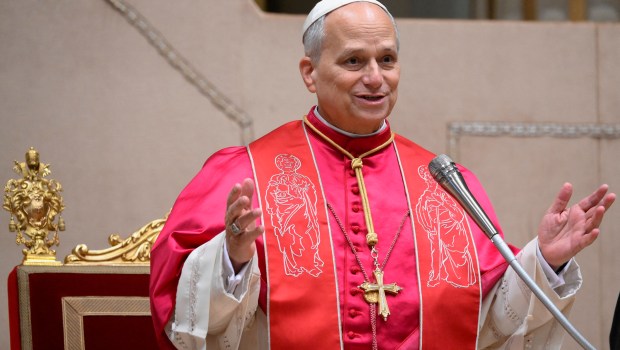
Photo by Handout / VATICAN MEDIA / AFP


During his address to the diplomats accredited to the Holy See, Pope Leo XIV emphasized that surrogacy and abortion are violations of human dignity.
Speaking on Friday, January 9, to the diplomats from the 184 nations with diplomatic ties to the Holy See, Pope Leo called life "a gift to be cherished," saying that the family is "its responsible guardian."
As such, "we categorically reject any practice that denies or exploits the origin of life and its development," he said.
"Among these is abortion, which cuts short a growing life and refuses to welcome the gift of life. In this regard, the Holy See expresses deep concern about projects aimed at financing cross-border mobility for the purpose of accessing the so-called 'right to safe abortion,'" said Pope Leo.
Further, the Holy Father called it "deplorable" that countries use public resources "to suppress life, rather than being invested to support mothers and families."
"The primary objective must remain the protection of every unborn child and the effective and concrete support of every woman so that she is able to welcome life," he said.
"Negotiable service"
Pope Leo also spoke about surrogacy, which he said serves to make "gestation into a negotiable service."
"This violates the dignity both of the child, who is reduced to a 'product,' and of the mother, exploiting her body and the generative process, and distorting the original relational calling of the family," he said.
What is surrogacy, and how is it different from adoption?
A surrogate pregnancy is when a woman is contracted to carry a pregnancy to term for someone who either cannot or does not want to get pregnant herself. The person or couple who receives the baby is referred to as the "intended" parents, and the surrogate is known as the "carrier." Paid surrogacy is illegal in many countries, but is a booming industry in others, particularly those where women face poverty and are thus vulnerable to such arrangements.
There are two main types of surrogate pregnancies. In a "traditional" surrogacy situation, the child is biologically related to the intended father and the carrier mother. In a "gestational" surrogacy, embryos are created through IVF from biological material of either the intended parents or donor(s).
This is different than adoption, as typically an adoptive couple are not the genetic parents of the child they raise. Additionally, the birth mother in an adoption is not contracted prior to pregnancy to gestate a child for adoption purposes.
What does the Church say about surrogacy?
Pope Leo's comments on Friday reaffirm what the Church teaches about surrogacy.
In January 2024, Pope Francis referred to surrogacy as a "grave violation of the dignity of the woman and the child," and said that a child can "never (be) the basis of a commercial contract."
The late pope also called for surrogacy to be banned worldwide.
"Consequently, I express my hope for an effort by the international community to prohibit this practice universally. At every moment of its existence, human life must be preserved and defended; yet I note with regret, especially in the West, the continued spread of a culture of death, which in the name of a false compassion discards children, the elderly, and the sick," he said.

No comments:
Post a Comment