Canterbury and the
Collapse of Anglican Unity
For more than a century, the archbishop of Canterbury has been regarded as primus inter pares, the “first among equals,” and the head of the Anglican Communion. This leading role signified a historic focus of unity for Anglicans around the world. Yet recent developments within global Anglicanism raise serious questions about whether the Church of England can still maintain that role in the life of what was once widely known as the Anglican Communion.
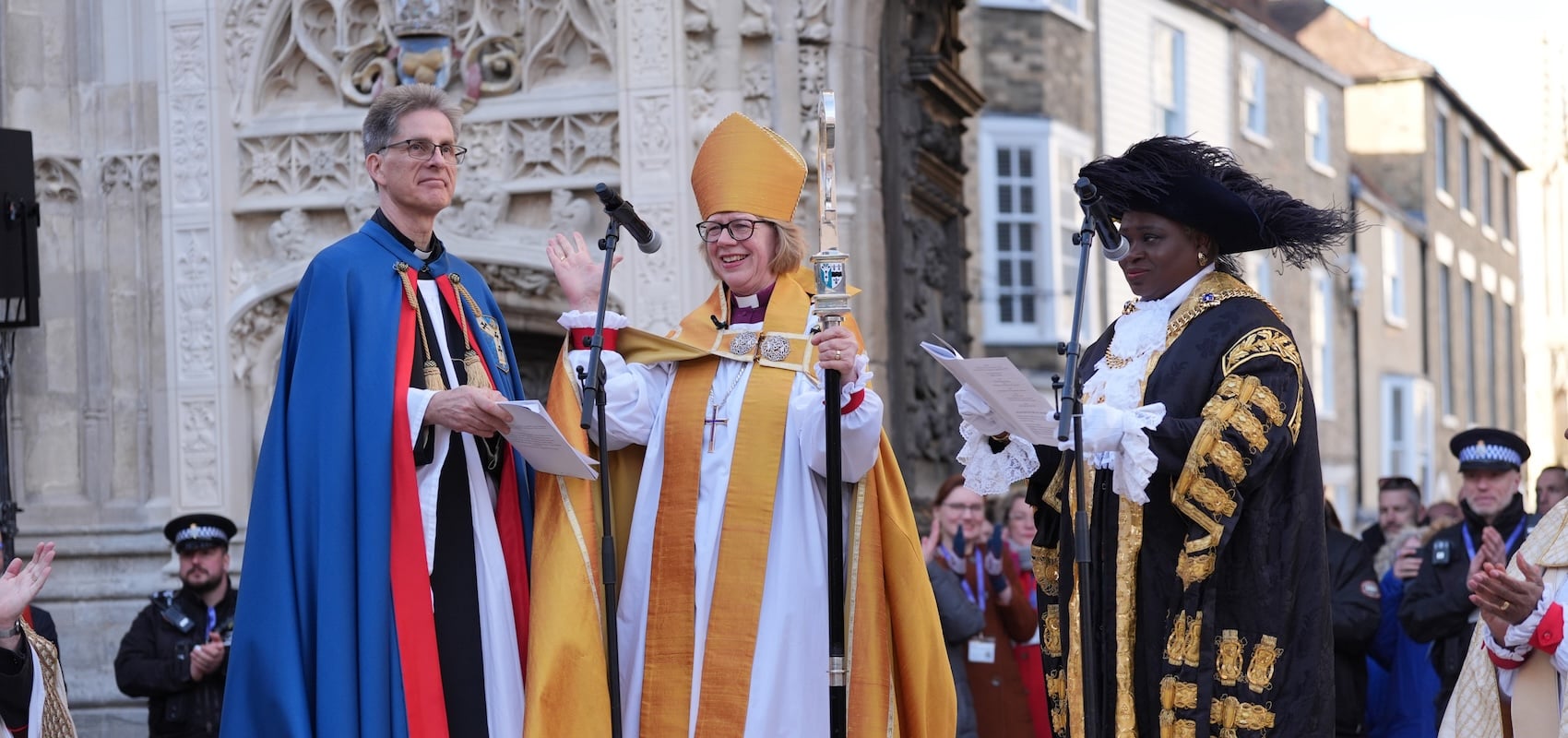
One of the most visible signs of this shift is the absence of sixteen (of forty-two) Anglican primates from the enthronement of Sarah Mullally, the new archbishop of Canterbury. Four could not attend due to extenuating circumstances. The other twelve represent more than 75 percent of the world’s Anglicans. Their absence is not a minor matter. It reflects a deep fracture in the global fellowship of Anglican churches. When the leaders of the majority of Anglicans no longer recognize Canterbury as the focal point of communion, the historical structure that once held the communion together becomes irrelevant.
The enthronement of Sarah Mullally as the archbishop of Canterbury differed significantly from the earlier enthronement of Justin Welby. His enthronement drew wide representation from across the Anglican world. Today, the diminished presence of Global South leadership underscores a widening division in the Anglican Communion. This division resulted from decades of doctrinal innovation. These innovations reached a climax when the General Synod of the Church of England passed a motion raised by Mullally to allow the blessing of same-sex couples.
Because of trends repudiating historic orthodox Christian teaching on sex and marriage at the beginning of this century, the 2008 Global Anglican Future Conference (GAFCON) protested in its Jerusalem Declaration: “We reject the authority of those churches and leaders who have denied the orthodox faith in word or deed. We pray for them and call on them to repent and return to the Lord.”
In a statement suggesting the enormity of Canterbury’s failure to be a focus for unity, the former archbishop Rowan Williams recently admitted: “I honestly don’t know whether the communion will survive.” Such a statement from a former leader of the Church of England reflects the gravity of the current crisis. It is not merely a matter of internal disagreement but a question about the very future of Anglicanism.
A significant turning point came in 2023 when the Global South Fellowship of Anglican Churches (GSFA) issued what became known as the Ash Wednesday Statement. In this declaration, the GSFA announced that it would no longer recognize the archbishop of Canterbury as primus inter pares and the head of the Anglican Communion. This decision marked a historic shift: The symbolic center of Anglican unity was effectively withdrawn by churches representing the majority of Anglicans worldwide.
The roots of this shift are not only historical but also theological and structural. The traditional configuration of the Anglican Communion emerged during the era of the British Empire. During that time, the Church of England functioned naturally as a coordinating center for Anglican churches established through missionary and colonial expansion. However, the global context has changed dramatically. The demographic center of Anglicanism has moved decisively to Africa, Asia, and Latin America. Today, the vast majority of Anglicans live in what is commonly called the Global South.
The departure of several western provinces from the traditional Anglican faith inevitably raises questions about unity, governance, and authority. Structures designed for a colonial or post-colonial context no longer adequately reflect the realities of a global church in which leadership, theological vitality, and numerical strength lie in the southern provinces. Many Global South leaders argue that unity cannot be sustained merely by historic ties to Canterbury; rather, it must be grounded in a shared commitment to biblical faith and apostolic doctrine and tradition.
In response to this need, GSFA developed a new Covenantal Structure aimed at providing theological coherence, ecclesial accountability, and interdependence among participating provinces. This covenantal framework was formally agreed upon at the Global South gathering in Cairo in 2019. Unlike the older relational model of the Anglican Communion—which relied largely on informal bonds of affection—the covenantal structure seeks to establish clearer commitments to orthodox doctrine, mission, and mutual responsibility.
The adoption of this structure has progressed steadily. Fourteen Anglican provinces have already embraced the GSFA Covenantal Structure, along with several Anglican missions. This development signals the emergence of a new pattern of global Anglican cooperation, one that is not centered on Canterbury and more shaped by shared theological commitments among churches of the Global South. This new structure does not signal the end of Anglicanism as a global movement but the development of a more united and interdependent communion.
The question regarding the future of Anglicanism depends on how the diverse orthodox Anglican groups, like the Global South, GAFCON, and other fellowships, might work together. Each in its own way seeks to advance the Kingdom of God in today’s broken world. I am hopeful that the upcoming conference on the “Future of Global Anglicanism,” which I will be attending along with five other Anglican leaders, will suggest a way forward. Unity must be preserved without sacrificing truth.